TOEFL Primary Step 2 Test #26 - Reading
12/31/2020 8:17:00 AMThis is a short sleep. You take this to rest and recharge your energy. You often take this at noon. What is it?
- nap
- break
- look
This is a period of time. It equals for two weeks. What is it?
- annual
- fortnight
- frequent
This is a taste of food. This taste is often made by chili. Children do not like it. What is this?
- sour
- bitter
- spicy
You do not listen to your mother's good words. You are a _____ child.
- obedient
- naughty
- unkind
This is a symptom. When you catch it, your temperature is high. You need to rest and drink enough water. What is it?
- fever
- headache
- sore throat
You want to be this when you grow up. Your job is to help people put out the fire. What is it?
- firefighter
- gardener
- magician
This is a kind of weather. There is a flash of bright light in the sky. What is it?
- lightning
- thunder
- storm
This is an object used by fairies. You often see it in cartoons. They can use it to turn a frog into a prince. What is it?
- wand
- stick
- chopstick
Your grandparents do this when they have to stop the job because of their health and age. They _____.
- return
- retire
- retreat
Read the email. Then answer the questions.
From: Sebastian
To: Zoe
I had a great time with my friends last weekend. On Saturday, we downloaded a film and then we watched it. While we were watching the film, my dad came home. He made some lemonade and cupcakes for us. After the film, we held a camp in the backyard. We put up tents together. My father helped us made a small barbeque party. There was so much fun. That night was the first time I saw the starry night at my porch. It was fantastic.
On Sunday it was Toby's birthday party. He is the youngest in our class. I am six months older than him. On his birthday, Toby got a lot of presents. I bought him a book.
Did you have a good weekend?
Love,
Sebastian
What did Sebastian impress most last weekend?
- The BBQ party
- His father's cupcakes
- The twinkling stars
Which is TRUE about Toby?
- He helped make the tent.
- His birthday was on Saturday.
- He is 6 months younger than Sebastian.
Read the letter. Then answer the questions.
Dear Luna,
Thanks for sending me a special gift. My mom took me to see an amazing musical called Matilda. She says it wasn't easy to get the tickets because everyone wants to see this show. The singing and dancing were awesome! I would love to be an actor in a musical but I am not very good at dancing or singing. My mom encourages me that everyone has their own talents and so do I. Maybe, I have not discovered it yet. Her words cheer me up so much.
We are thinking of going to see the Lion King in May. Shall we get you a ticket?
I hope to hear from you soon.
Clara.
What is the letter about?
- To thank Luna for her present and tell her about some films
- To say thank you Luna and write about Clara's dream
- To wish Luna the best and invite her for a play
What did Clara's mom do to help her happier?
- Take her to watch a film named Matilda
- Encourage her to believe in her own talent
- Promise to let her watch Lion King
Read the poster. Then answer the questions.
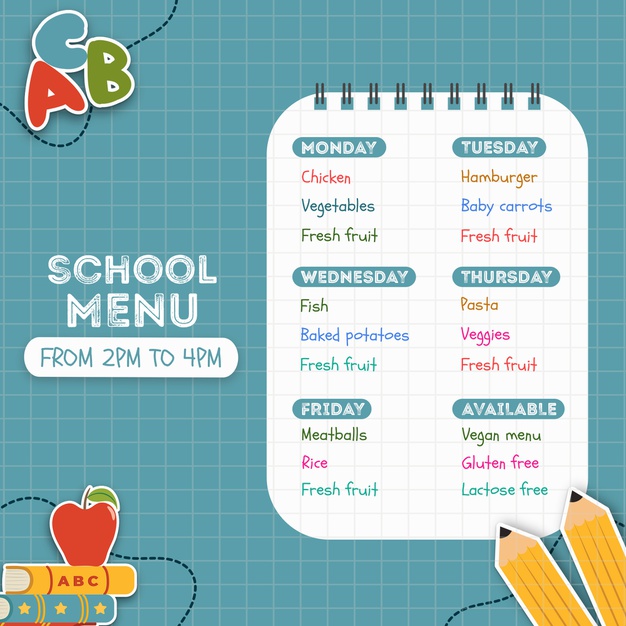
How long does the school canteen open?
- 1 hour
- 2 hours
- 3 hours
Which day is NOT included in the school menu?
- Weekday
- Saturday
- Wednesday
Which kind of food is available at all meals on weekdays?
- Vegetables
- Vegan
- Fresh fruit
Students can pick up more _____ because it is always served.
- gluten-free food
- baked potatoes
- meatballs
Read the instructions. Then answer the questions.
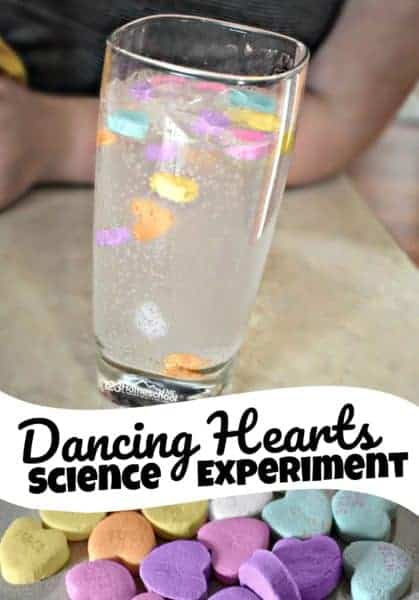
Dancing Hearts
What you will need:
- 300ml drinking glass
- 200ml 7-up or Sprite
- 12 heart-shaped sugar candies
How to make:
1. Fill a drinking glass with the soda
2. Drop all the candies into the soda
3. Observe the hearts dance up and down in the soda
How it works:
The carbon dioxide picks the candy hearts up and throws them to the top of the glass. When they reach the top, the bubbles burst and the candy works its way down again.
Which soda is used as a material?
- Coke
- 7-up
- Pepsi
What will happen after you put candies into the glass?
- They will drop to the bottom of the glass.
- They will float to the surface of the glass.
- They will move up and down in the glass.
The candies go up to the top of the glass thanks to _____.
- The carbon dioxide
- The bubbles
- The sugar in the candies
Read the story. Then answer the questions.
Good or Bad
There lived a villager. He made his living by selling seeds in the market. He had ten bags with him, which he would carry to another village to buy the seeds. Of the ten bags, one was different from the rest. It had many holes and was torn in a few places. But, despite its poor condition, the villager would carry it regularly together with all other bags to get the seeds from another village.
One fine day, the torn bag started thinking, “I am but a torn bag. I have so many holes. I don’t understand why my master takes me along for bringing seeds. Why doesn’t he throw me out?” He decided to ask the villager. “Oh my master, why don’t you just throw me away? You know I am no use. I don’t serve you honestly. I spill all the seeds you fill in me, all along the way. By the time you reach home, I have no seeds left to offer you. Please, may I know why you don’t do away with me?” asked the bag.
The villager patiently listened to the torn bag. Then, he smiled and said, “My dear bag, who told you that you are bad? You don’t know how good you are! Come, I will tell you what good you have done to me, and to others as well.”
The villager took the torn bag into his arms and took it outside to show it something. The villager then said, “Do you see all these trees? These trees are there all along the way from this village to the next, from where I buy seeds. These trees have grown from the seeds you have been spilling along the way for so many years.” The villager then paused for a second and continued, “These trees give a cool shade to the tired passers-by on hot sunny days. They also give oxygen to living beings and fruits to birds, animals, and humans. Can’t you see what great service you have been to the world?”
The torn bag was happy to learn all this. It had realized that everyone everywhere had something good to offer the world!
What is the story mainly about?
- A man and his torn bag
- The torn bag can talk
- The man who sells bags
Why did the torn bag think that it was no use?
- Because it wasn't taken along with the master.
- Because it couldn't carry a lot of seeds.
- Because it was in poor condition and had many holes.
What did the villager do after listening to the bag?
- He felt tired and turned away.
- He smiled and showed it something.
- He still carried the bag with him.
What is the good thing made by the torn bag?
- Seeds spilled along the way grew into trees.
- Oxygen is necessary to humans and animals.
- The trees gave shades to passers-by on sunny days.
Read the story. Then answer the questions.
Alex and his classmates were excited as they boarded the bus for their field trip to a recycling plant. They learned about the importance of recycling and waste reduction in class, so they were eager to see it in action.
As they arrived at the plant, they were greeted by a friendly guide who showed them around. They saw huge machines that sorted and processed recyclable materials.
The guide explained how recycling reduces waste and saves valuable resources. "By recycling, we can protect our environment and make the Earth a better place for everyone," the guide said.
Alex was impressed and raised his hand. "What can we do to help?" he asked.
The guide smiled. "You can start by recycling at home and at school. Encourage others to do the same," she replied.
Back at school, the class started their recycling project with enthusiasm. They set up bins for paper, plastic, and glass. They even made posters to encourage everyone to join in.
Their project had a positive impact on the community. The school became cleaner, and people around them started recycling too. They were proud of their efforts.
What was Alex looking forward to?
- A summer vacation
- A trip to a recycling plant
- An event about pollution
What did the guide explain to the students?
- The ways to operate the machines
- The history of the recycling plant
- The importance of recycling
What did the students do back at school after the trip?
- They made a planting project.
- They painted the school walls.
- They started to sort out trash.
What outcome did the class project have on the community?
- People joined in recycling.
- People raised fund for the project.
- People cleaned the neighborhood.
Read the text. Then answer the questions.
The Performer and the Flea
Once there was a performer who had trained a flea to perform tricks. He went from place to place with his performing flea to earn money.
One day, they visited a distant country and performed in a king’s court. The princess was delighted with the flea’s performance and wanted to keep the flea. She was very stubborn and refused to eat food if her wish was not granted. The king forced the performer to give him the flea and gave it to his daughter. The princess was very happy once her wish was fulfilled.
Left with no means of earning a livelihood, the performer was very upset and wanted his flea back but didn’t know what to do.
After a lot of thought, he made a plan. He disguised himself and went to the king.
“Sire, I beg permission to make a big cannon for you,” he pleaded. The king happily agreed. The performer asked for a piece of silk cloth, some ropes and a basket. But instead of making a cannon, he made a big balloon.
The king who had never seen a cannon or a balloon believed the clever performer. The performer told the king that he needed the help of a flea to cool the cannon. The king called for the flea and handed it to the performer.
The clever performer jumped into the balloon and flew away to his country with his flea.
What did the flea make to help the perform earn money?
- fun
- tricks
- sound
What happened after the flea was forced to give to the princess?
- The performer couldn't have more money.
- The performer was happy to fulfill her wish.
- The performer felt sad for being alone.
What is the performer's plan?
- He disguised and came to meet the princess.
- He promised to make a big gun for the king.
- He tricked the king and took the flea back.
What is NOT the thing that the performer asked from the king?
- silk cloth
- ropes
- bucket
Read the text. Then answer the questions.
The first skyscrapers
The term ‘skyscraper’ has been used in a number of ways over the years: an ornament on the top of a building, a high-flying bird, a very tall man and a sail at the top of a mast. At the end of the nineteenth century, the word was used to refer to buildings of ten storeys or more. Later, a lift was used to take people up to the higher floors, as in the most famous skyscraper, the Empire State Building.
During the middle ages, the people who lived in the cities of northern Europe began to build great cathedrals. Tall spires were added to make these churches higher and bring them closer to heaven.
In the nineteenth century, as cities grew more crowded with people looking for work the value of land rose. New businesses were starting and in order to make room for offices on a small plot of land, it was necessary to build higher. But the problem was that to put up a stone building of such height, the walls on the ground floor would have to be more than two meters thick to hold the weight of the building. So another material was required to make skyscrapers possible.
In the past, the word "skyscraper" had _____.
- only one meaning
- different meanings
- the same meaning as today
What was the problem with making tall buildings with the stone?
- It was an expensive material.
- It was too heavy.
- It wasn’t strong enough.
Read the text. Then answer the questions.
The first swallow of summer
During March and April, the first of our summer visitors reach Greece. Arriving to feast on insects of summer, millions of birds cross the Mediterranean. One of the most familiar is the swallow. Let’s look at what these much-loved visitors have been doing since we last saw them in October.
In comparison to other migrants, like swifts, swallows are relatively slow travelers. They move by day and the fact that they catch their food in the air means they can snack on the way. This is a great advantage over other migrants that have to reach rich feeding areas a long distance away before they can eat.
I remember watching thousands of swallows coming in to rest at Lake Koronia in northern Greece, one September. As the light faded the air was full of wheeling birds, all onto the reeds below.
Normally, most birds will travel between 100 and 200 kilometers a day for a couple of months and more. But swallows travel south, crossing the Mediterranean and the Sahara Desert, in one flight.
What is the advantage of the swallow?
- They migrate sooner than other birds.
- They catch insects in the air to eat as snacks.
- They are the animals loved by nature.
According to paragraph 3, it can be inferred that swallows _____.
- travel lower than most birds
- travel faster than most birds
- travel as a flight