Đề số 1 luyện thi ĐGNL vào Đại học Sư phạm Hà Nội
3/1/2022 11:17:03 AM_____ invented paper in the first century A.D.
- The Chinese
- Chinese
- A Chinese
- The China
Anna _____ last night when the telephone _____.
- slept-rang
- slept - was ringing
- was sleeping - rang
- was sleeping - was ringing
- is crying
- has been crying
- cried
- has cried
It’s time the authorities _____ people _____ safety helmets.
- have/ wear
- had/ wear
- had/ to wear
- have/ worn
He expected _____ for an Oscar, but he wasn't.
- nominating
- to nominate
- to be nominated
- being nominated
- should have floated
- must be floating
- would be floating
- would have been floating
My boss is going on vacation next month, _____ she’ll be away from the office for about four weeks.
- in other words
- for instance
- on the other hand
- such as
Are there any household chores for _____ men are better _____ than women?
- whose/suited
- which/suit
- that/suit
- which/suited
These books are _____ than those books.
- thicker
- more thicker
- the thickest
- as thick
A sudden idea _____ to the cyclist that he might try the new method.
- occurred
- happened
- took part
- took place
We've got a very _____ teacher, who doesn't mind if we are a bit late.
- stubborn
- narrow-minded
- easy-going
- sociable
He would win the race if he ____ his brother's example and trained harder.
- repeated
- set
- answered
- followed
If you put your money in a bank now, you may get 12% _____ annually.
- interest
- profit
- money
- income
When he started that company, he really went _____. It might have been a disaster.
- out on a limb
- on and off
- over the odds
- once too often
- efficiently
- differently
- variously
- freshly
We talked for two hours and the _______ in my phone died.
- calculator
- camera
- battery
- contact
The journey takes a long time ______ road.
- at
- in
- by
- on
In winter, heating _____ for 50 percent of our electricity bill.
- accounts
- costs
- occupies
- takes
When a fire broke out in the Louvre, at least twenty _____ paintings were destroyed, including two by Picasso.
- worthless
- priceless
- valueless
- worthy
Read and answer the following questions.
Don't Be Lazy- Use the Garbage Can!
Written by Krista Garver
Think about all the garbage cans in your home, at your school, or in offices and stores. There might be a hundred garbage cans at just one school! Imagine what would happen if we dumped all of that garbage into the street. Gross!
Luckily, most people don’t empty garbage cans into the street, but sometimes they throw their gum or a food wrapper on the ground. One tiny piece of trash might not seem like a big deal but think about if everyone did that, it would be like emptying all of the world’s garbage cans into the street.
Littering is a serious issue. Litter is ugly, and it makes our cities and roads dirty. It also has negative consequences for people and the environment.
When garbage decomposes or breaks down, it releases chemicals. Usually, all our trash goes to huge landfills. In a landfill, the chemicals from garbage are contained. But outside of a landfill, these chemicals go into the ground. They can contaminate the soil and even get into our water. For example, the ink on our newspapers can be toxic to the soil and water.
Garbage also pollutes the air. Plastics and other materials release chemicals into the air. If people breathe in this air, they can get sick.
Garbage releases gases, like methane. Methane is a greenhouse gas that damages the ozone layer around the Earth. The ozone layer protects our planet from getting too hot; if it is damaged, the sun's rays will heat up the Earth.
Trash thrown in the street often comes into contact with animals. Sometimes, these animals accidentally eat the garbage. Trash can also be washed into the sewers and out into the ocean. Unfortunately, there is already a lot of trash in the ocean. It destroys habitats for marine animals.
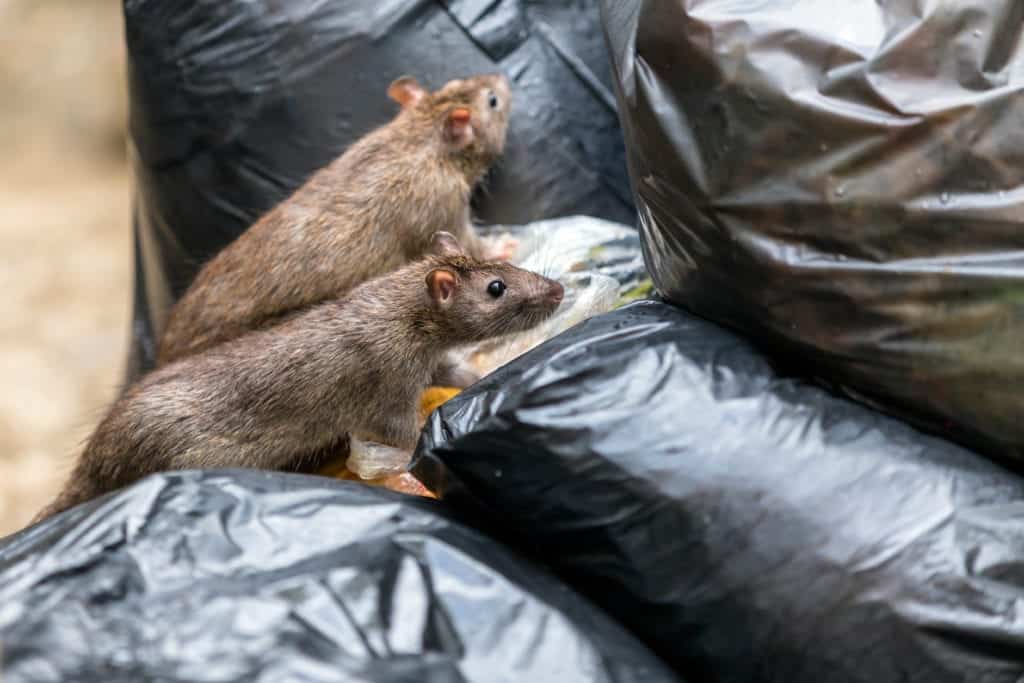
Trash can be harmful to our health as well. It attracts bacteria and rats. During the Middle Ages, nearly one-third of the Europeans died of the Bubonic Plague. There were no landfills or trash collectors in the Middle Ages, and people just dumped garbage into the streets and rivers. This contaminated the water and attracted rats. The rats had fleas, and the fleas caused the deadly disease.
We are lucky that today we have better systems for getting rid of trash and keeping our streets clean. All you have to do is throw your trash into a garbage can, and workers will do the rest. If you don’t see a garbage can, hold onto your trash until you do. Our environment and our health depend on it.
Source: Mobymax Reading Stories G3.4-3.6
According to the article, how does littering affect marine animals like dolphins or fish?
- Marine animals are safe from litter because they live in the water.
- Birds carry litter to the ocean, where it destroys marine animals' habitats.
- Litter and chemicals can be washed to the ocean, where it destroys marine animals' habitats.
- Many of the diseases that come from trash can get fish and other marine animals sick.
Why should you throw trash into a landfill instead of on the street?
- Landfills burn all the trash, which makes it safe.
- You should not throw your trash away in the landfills.
- Landfills can contain the chemicals found in trash.
- Landfills are already covered in trash, so you can throw trash there.
What is the synonym of the word "contaminate" in the passage?
- clean
- pollute
- protect
- destroy
The word "it" in the last sentence refers to _____.
- getting rid of trash
- throwing trash into a garbage can
- keeping the streets clean
- collecting trash in the neighborhood
In paragraph 1, the word "spews" is closest in meaning to ____.
- heats
- pours
- pushes
- sprays
Which is NOT mentioned as a factor necessary for a geyser to exist?
- Cracks leading to the surface
- Underground water sources
- Superheated lava in volcanoes
- Tunnels located under the ground
Based on the passage, what is probably true about Old Faithful?
- It has a constant source of water.
- No other geyser is as famous as it.
- Tourists enjoy watching it erupt.
- It erupts more than any other geyser in the world.
What would be the best title for the passage?
- Old Faithful in Yellowstone National Park.
- How a Geyser erupts?
- Where Are the World's Geysers?
- Geysers: How Many Are There?
Read the passage and answer the questions.
In Yellowstone National Park, one of the most popular sights is Old Faithful. Approximately every ninety minutes, it shoots streams of heated water high into the air. Old Faithful is a geyser. A geyser is a natural formation that spews water from underground into the air.
There are three factors that must exist for a region to have geysers. The first is that the region needs an underground heat source. This often comes from molten rock - called magma - that is relatively close to the surface. The heat from the magma radiates into the surrounding rock, which then raises the temperature of the water. It is for this reason that most geysers are located in volcanically active areas.
The second factor is that there must be an underground source of water. The water can come from various sources, including rainfall, melted snow, and groundwater. The third and final factor is the presence of underground chambers and tunnels. Rocks near volcanoes are often porous, so they have a number of cracks, tunnels, and chambers. These combine to form something like the plumbing system in a house; this results in there being many places for water to flow through the ground. At times, there are narrow cracks in the rock that go all the way to the surface. When that happens - and when there is a large chamber full of water beneath the crack - a geyser is formed.
In order for a geyser to erupt, the following steps take place. First, water starts gathering in an underground chamber. There, it is heated and starts to rise to the surface through cracks in the ground. As the water moves away from the heat source, it cools. This cooled water presses down on the water beneath it. The water below gets trapped and is prevented from rising. While it remains unmoving, it begins to heat again. Soon, it becomes so hot that it turns to steam. The steam pushes the cooled water up toward the surface. By this point, the chamber has collected a large amount of water, all of which has been superheated while being subjected to a lot of pressure. The water in the chamber suddenly turns into steam. This causes the steam and water above it to explode violently through the cracks leading to the surface. Sometimes a column of steam and water dozens of meters high is expelled. Some geysers, such as Old Faithful, erupt on a regular basis. Others erupt more seldom whenever the conditions are right.
Read the text and use the word given in capitals at each gap to form a word that fits in each gap.
Left-handedness
Ten percent of the population is left-handed. Traditionally, there has been a lot of social (DISCRIMINATE) against left-handed people. How hard is it for them to live in a right-handed world?
A number of (PRACTICE) items such as scissors have been designed for right-handed people. It can be very (CONVENIENT) for "lefties" to be sitting next to "righties" during dinner. Commonly-used computer keys are on the right of the keyboard. Lefties have to use their own sports equipment. Less frequently-used car controls such as headlight switches are also on the right.
Forcing children to use their right hand can cause (DIFFICULT) at school, which may then have an impact on left-handed students’ academic development. It can also result in learning problems like dyslexia. Trying to make lefties use their right hand can explain (POTENTIAL) rebellious behavior at school, as well as causing clumsiness and frustration.
(Adapted from FCE Essentials)