Đề số 2 luyện thi ĐGNL vào Đại học Sư phạm Hà Nội
3/4/2022 5:18:32 PMAre there _____ good tracks on this CD?
- some
- any
- much
- few
_____ writing your name and address with your left hand?
- Have you tried ever
- Are you ever trying
- Have you ever tried
- Are you trying ever
There's _____ in the living room. He wants to see you.
- somebody
- everybody
- anybody
- nobody
If I _____ it was a formal party, I wouldn't have gone wearing jeans and a jumper.
- knew
- had known
- had been knowing
- could know
- being awarded
to have awarded
- to be awarded
having awarded
Are you sure you told me? I don't recall _____ about it.
- having told
- having been told
- to have told
- to have been told
-“Is swimming underwater very difficult?”
-“No, it’s just a matter _____ able to control your breathing.”
- to be
- of being
- that you are
- being
My sister is a woman of _____ age.
- marriage
- married
- marrying
- marriageable
My brother’s eyesight is perfect, but I ____ glasses since I was seven years old.
ought to wear
must have worn
had better wear
have had to wear
- decision
- job
- choice
- selection
Conical hat making in the village has been passed _____ from generation to generation.
- on
- down
- up
- in
It seems that the world record for this event is almost impossible to _____.
- get
- beat
- take
- achieve
Although Rose tried _____ to pass her driving test, she failed.
- hard
- hardly
- quick
- quickly
The operation of the newly constructed plants is likely to lead to ______ environmental consequences.
- far-reaching
- far-gone
- far-off
- far-flung
I don't think anyone understood what I was saying at the meeting, did they? I totally failed to get my point _____.
- around
- along
- across
- about
Perhaps no creature on land or sea _____ so much terror as The Great White Shark.
- inspires
- makes
- affects
- expresses
Jack _____ me that he was enjoying his new training course.
- said
- spoke
- talked
- told
The river is so _____ here that you can easily cross it on foot.
- calm
- wide
- shallow
- warm
The man _____ that he had had something to do with the break-in.
- refused
- denied
- objected
- rejected
Read the passage and answer the questions.
Just My Type
Written by Elizabeth Baker
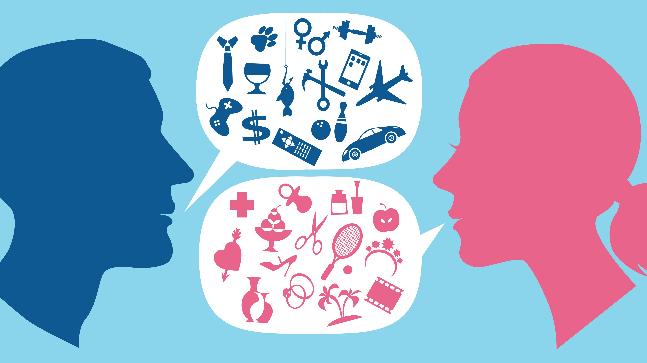
Have you ever been called a "nerd" or a "jock"? These are examples of labels. People use labels to try to understand others. People choose labels for several reasons. It could be based on the clothes someone wears. It could be based on the way he or she looks. Most of the time, these labels are not based on facts or knowing a person. This can be hurtful.
Sometimes we even make guesses or assumptions about people that we don't know. The guesses are called stereotypes. Anytime you hear someone say that all of these people or all of those people do this or do that, you are hearing a stereotype. It is impossible that everyone in a group is exactly the same!
For example, some people might say that all dogs are mean. However, the truth is that some dogs are mean and some dogs are nice. It is not fair to say that they are all exactly alike.
Some movies, television shows, and video games show people in a very simple way. They misrepresent people and don't show what they are really like. A stereotype can make us think bad things about a person that aren't true at all.
Some stereotypes are about the differences between boys and girls. A stereotype might be that girls can't play baseball as well as boys, or that boys shouldn't play dress-up. We know that isn't true at all! There are a lot of girls who are good at baseball, and it's fun to play dress-up, no matter who you are!
Let's test some stereotypes to see if they are true.
One stereotype could be that all girls have long hair. Look around the room. Is this stereotype true? Probably not! Another stereotype is that all boys are better at sports than girls. Think about your friends and classmates. Are all the boys better at sports? Probably not!
If we just use stereotypes, then we are not getting the complete picture of a person. It is important to notice the details that make a person special. Not everyone is alike, and that's a good thing. What kind of world would this be if we all were exactly the same? It would be boring! We are all different, and that's what makes life interesting.
Source: Mobymax Reading Stories G3.0-3.3
What are stereotypes according to the article?
- opinions about our closest friends and their relationships
- guesses or assumptions about people that we don't know
- interesting rumors about famous people and their lives
- thoughts on how to become a good sportsman
If we believe in a stereotype, what can happen?
- We can learn more about people.
- We can make more friends.
- We can become popular at school.
- We can misunderstand a person.
Which of the following is NOT mentioned in the passage?
- Several ways to label people
- Tips to evaluate people better
- A stereotype about appearance
- Some examples of labels
What does the word "misrepresent" mean?
- to not portray accurately
- to anger other people
- to not get along with
- to make friends with
Read the passage and answer the questions.
Penguins are flightless, aquatic birds found almost exclusively in the southern hemisphere. The number of penguin species is debated, with estimates ranging from 17 to 20. Some sources treat the white-flippered penguin as a separate species, while others consider it a subspecies of the little penguin. Similarly, the royal penguin is often debated as either a color morph of the macaroni penguin or a distinct species.
Although all penguin species are native to the southern hemisphere, they are not, contrary to popular belief, found only in cold climates, such as Antarctica. In fact, only a few species of penguin actually live so far south. At least ten (verification needed) species live in the temperate zone; one lives as far north as the Galápagos Islands: the Galápagos penguin.
The largest living species is the emperor penguin: adults average about 1.1 m tall and weigh 35 kg or more. The smallest penguin species is the little blue penguin (also known as the fairy penguin), which stands around 40 cm tall and weighs 1 kg. Among extant penguins, larger penguins inhabit colder regions, while smaller penguins are generally found in temperate or even tropical climates. Some prehistoric species attained enormous sizes, becoming as tall or as heavy as an adult human. These were not restricted to Antarctic regions; on the contrary, subantarctic regions harbored high diversity, and at least one giant penguin occurred in a region not quite 2,000 km south of the Equator 35 million years ago, in a climate decidedly warmer than today.
Most penguins feed on krill, fish, squid, and other forms of sea life caught while swimming underwater. They spend half of their life on land and half in the oceans.
Penguins seem to have no special fear of humans and have approached groups of explorers without hesitation. This is probably on account of there being no land predators in Antarctica or the nearby offshore islands that prey on or attack penguins. Instead, penguins are at risk at sea from predators such as the leopard seal. Typically, penguins do not approach closer than about 3 meters (9 ft); they become nervous at about that distance. This is also the distance that Antarctic tourists are told to keep from penguins (tourists are not supposed to approach closer than 3 meters, but are not expected to withdraw if the penguins come closer).
(Adapted from TOEFL Junior 10 Practice Tests)
- Penguins
- Penguins Are Endangered
- Penguins and Humans
- Kinds of Penguins
What can we infer from the second paragraph?
- More people believe penguins don't always live in cold climates.
- You can find penguins living in any continent.
- There are more penguins living in Antarctica than any other places.
- Sometimes we need to correct the popular beliefs.
In the third paragraph, the word "these" refers to _____.
- adult humans
- tropical climates
- prehistoric penguins
- subantarctic regions
In the third paragraph, the word "extant" is closest in meaning to _____.
- endangered
- unknown
- existing
- depressed
Complete the sentences with the correct form of the words in capitals.
WALKING HOLIDAYS
The Real Walkers Company offers a selection of small group walking holidays which explore some delightful hidden corners of Europe, the Americas, and Australasia. There is something for everyone to enjoy on these holidays, (REGARD) of age or level of fitness. The brochure includes various destinations and a range of itineraries. These range from sightseeing tours of historical cities to undemanding walking trips in unspoiled coastal and rural regions and, for the more (ADVENTURE) traveler, challenging mountains or hill-walking expeditions. But it would be (FAIR) to give the impression that these holidays are just about walking. According to the brochure, an enjoyment of walking is often the thing that brings together a group of like-minded people, who share the (PLEASE) of good companionship in attractive surroundings. The company believes that its tour leaders are the key to its success. These people are fully trained and are particularly keen to (SURE) that each individual traveler makes the most of their trips.