Đề ôn luyện PSA phần Tiếng Anh vào 6 THCS Ngoại ngữ năm 2025 - Đề số 3
8/16/2023 6:00:00 AMTurn down the music a bit, _____?
- are you
- do you
- will you
Alex: Should we take the train or bus?
Liam: I prefer trains _____ buses - they’re more comfortable.
- to
- with
- than
She has a natural talent _____ music, and she plays several instruments beautifully.
- in
- of
- for
The first _____ is extremely important because it is what other people use to judge you.
- impress
- impression
- impressive
It is _____ normal to live with your parents. You don’t have to move out if you don’t have the means.
- absolutely
- exceptionally
- incredibly
Minh: Your car’s brakes sound weird.
Hung: I know. They need _____ before our road trip.
- checking
- to be check
- to check
On a clear night, you can see countless stars shining brightly _____ the sky.
- on
- in
- at
I bought a new jacket last week but I _____ it yet.
- didn't wear
- don't wear
- haven't worn
Read the text and choose the best answer to fill in the blanks.
CHRISTMAS
The Christmas season very early in Britain. By the end of October, you may see Christmas decorations in the streets and Christmas cards and gifts in the shops. Traditionally, people start to decorate their houses one or two weeks before 25th December is Christmas Day.
There are a lot of traditions connected to Christmas. The most important one is the giving of presents. Family members wrap up their gifts and leave them at the bottom of the Christmas tree on Christmas morning. Children leave a long sock or at the end of their bed on Christmas Eve, 24th December, hoping that Father Christmas will appear during the night and them small presents, fruits and nuts. They are not usually disappointed. Sometimes on Christmas Day, the family will sit down for a big turkey dinner and Christmas pudding. Later in the afternoon, they may watch the Queen on television as she her traditional Christmas message to the United Kingdom and the Common Wealth. they have rooms for even more food, they may enjoy a piece of Christmas cake or eat a hot mince pie. 26th December is also a public holiday, Boxing Day, and this is the time to visit friends and relatives or watch football.
Read the passage and choose the correct answer to each question.
Body language is a vital form of communication. In fact, it is believed that the various forms of body language contribute about 70 percent to our comprehension. However, it is important to remember that body language differs significantly between cultures. Take, for example, eye movement. For example, in the USA, children are taught to look directly at a parent or teacher when being scolded. In contrast, in many other cultures, looking directly at an authority figure in such a situation is seen as disrespectful, and children are expected to avoid direct eye contact.
Another form of body language that varies across cultures is personal space or distance. In North America, people tend to keep more physical distance from each other compared to people in South America. For instance, two North Americans who do not know each other well will stand about four feet apart. However, South Americans in the same situation might stand only two to three feet apart. North Americans typically reduce that distance only in private conversations or when there is an intimate relationship.
Gestures also differ from one culture to another. Although we use gestures like pointing a finger, raising an eyebrow, or waving an arm to communicate, they do not always have the same meaning everywhere. For example, sticking out your tongue may indicate a mistake in some cultures, while in others, it could be considered a sign of ridicule or disrespect.
The risks of miscommunication are high when it comes to body language. Learning a culture’s verbal language is not enough; it is just as important to understand its non-verbal signals. To communicate effectively, we must be aware of both spoken words and body language in different cultures.
What is the passage mainly about?
- The significance of non-verbal signals in America
- Misunderstandings in communication
- Non-verbal communication across cultures
It can be concluded from paragraph 1 that _____.
- looking directly into an adult's eyes is not always considered polite.
- people do not use body language much when they communicate.
- people use the same body language to mean a thing in every country.
Which form of body language is NOT mentioned in the passage?
- posture
- gesture
- distance
Which group tends to stand closer when interacting with unfamiliar people?
- South Americans
- North Americans
- Mexicans
To communicate successfully with people from another culture, a person should _____.
- learn only non-verbal signals of that culture
- use the body language of the people from that culture
- learn both the language and non-verbal signals of that culture
Choose the correct answer in the box to complete the conversation. Write only the letter A-D in each blank.
|
A. I think I've got it now. B. Can you tell me again? Which road do I take first? C. Why are you going there? D. You should be at home. |
Peter: Hi Jane, do you know how to get the downtown?
Jane: Sure.
Peter: I want to buy a new computer.
Jane: OK. At first, go straight down this road. When you get to the second light, take a left. Then, get on the high way and take exit 52.
Peter: That sounds really complicated.
Jane: You go down this road, then at the second light, turn left. That road is main street.
Peter: OK,
Choose the sentence that is CLOSEST in meaning to the sentence given.
We always stand by you when you are in need.
- We cannot do anything for you though you are in need.
- We always support and help you when you are in need.
- We can never stand your necessity.
Choose the sentence that is CLOSEST in meaning to the sentence given.
Go over the report before you submit it.
- Before you submit the report, you should be finished writing it.
- Type the report quickly and then submit it.
- Read the report carefully before you submit it.
Choose the sentence that is CLOSEST in meaning to the sentence given.
The man is so foolish that no one took any notice of him.
- The man was too silly for anyone to pay attention to him.
- People listened carefully because the man was very wise.
- The man was not foolish enough to be ignored.
Choose the sentence that is CLOSEST in meaning to the sentence given.
“Why don’t you ask the teacher for help?” Peter asked me.
- Peter advised me to ask the teacher for help.
- Peter recommended me not to ask the teacher for help.
- Peter suggested that he should ask the teacher for help.
Read and do the following tasks.
A. You may get some food when you buy something to read.
B. Visitors can't visit this place because of very bad weather.
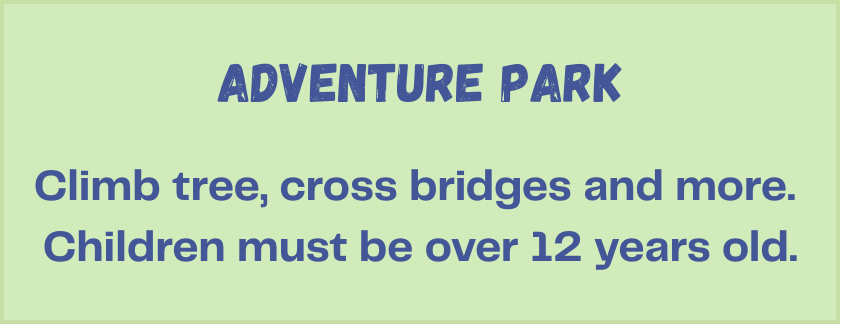
C. Children aged 13 or over shouldn't play here.
D. Only teenagers and adults are allowed to do the activities in this park.
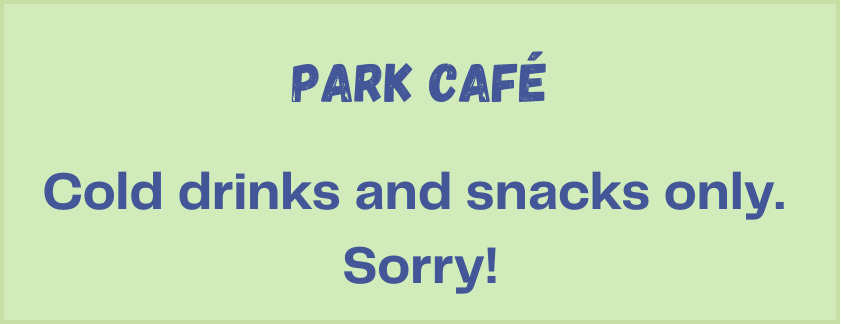
E. It will not be possible to get hot chocolate here today.
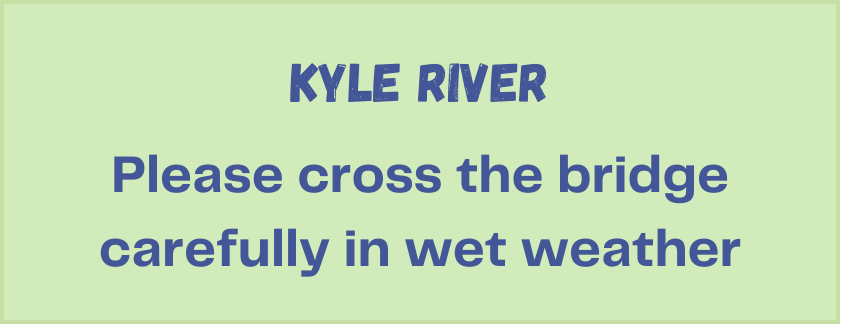
F. Visitors are warned to cross the bridge slowly when it rains.
What does this notice say?
=> Answer:
What does this notice say?

=> Answer:
What does this notice say?
=> Answer:
What does this notice say?
=> Answer: