Đề ôn luyện PSA phần Tiếng Anh vào 6 THCS Ngoại ngữ năm 2025 - Đề số 7
8/20/2023 6:00:00 AMMike: How was your English test?
Tom: It was _____ than the math test. I found it really difficult.
- bad
- better
- worse
The teacher asked us to focus _____ the main points of the reading assignment.
- about
- on
- in
The soup tastes better when you add a secret _____ that enhances the flavor.
- ingredient
- substance
- element
Janifer: Wow! _____ a fashionable skirt you are wearing!
Mary: Thank you. That's a nice compliment.
- What
- How
- Why
_____, England had a lot of influence on other countries throughout the world.
- History
- Historian
- Historically
The team practiced late so as _____ their performance.
- perfect
- perfecting
- to perfect
As the drug took _____, the patient became quieter.
- influence
- action
- effect
They _____ in that house for over ten years before they decided to move.
- had lived
- were living
- have lived
Read the following passage and choose the best answer for each blank.
School exams are, generally speaking, the first kind of tests we take. They how much knowledge we have gained. But do they really show how intelligent we are? After all, isn’t it a fact that some people who are very successful academically don’t have any common sense? Intelligence is the speed at which we can understand and react new situations and it is usually tested by logic puzzles. scientists are now preparing advanced computer technology that will be able to “read” our brains, for the present tests are still the most popular ways of measuring intelligence.
A person’s IQ is their intelligence as it is measured by a special test. The most common IQ tests are run by Mensa, an organization was founded in England in 1946. By 1976, it 1300 members in Britain. Today, there are 44000 in Britain and 100000 worldwide, largely in the US. People taking the tests are judged in relation to an average score of 100, and those who score over 148 are entitled to join Mensa. This works out at 2% of the population. Anyone from the age of six can take the tests. All the questions are and most people can answer them if allowed enough time. But that’s the problem – the whole point of the tests is that they’re against the clock.
Read the following passage and choose the correct answer to each of the questions.
Millions of people are using cellphones today. In many places, it is actually considered unusual not to use one. In many countries, cellphones are very popular with young people. They find that the phones are more than a means of communication - having a mobile phone shows that they are cool and connected. The explosion in mobile phone use around the world has made some health professionals worried. Some doctors are concerned that in the future many people may suffer health problems from the use of mobile phones. In England, there has been a serious debate about this issue. Mobile phone companies are worried about the negative publicity of such ideas. They say that there is no proof that mobile phones are bad for your health.
On the other hand, medical studies have shown changes in the brain cells of some people who use mobile phones. Signs of change in the brain cells were seen by modern scanning equipment. In one case, a traveling salesman had to retire at young age because of serious memory loss. He couldn't remember even simple tasks. He would often forget the name of his own son. This man used to talk on his mobile phone for about six hours a day, every day of his working week, for a couple of years. His family doctor blamed his mobile phone use, but his employer's doctor didn't agree.
What is it that makes mobile phones potentially harmful? The answer is radiation. High-tech machines can detect very small amounts of radiation from mobile phones. Mobile phone companies agree that there is some radiation, but they say the amount is too small to worry about. As the discussion about their safety continues, it appears that it's best to use mobile phones less often.
What is the passage mainly about?
- Why mobile phones are expensive for young people
- The popularity and health risks of mobile phone use
- Mobile phone prices and how to choose the best one
Cellphones are especially popular with young people because _____.
- they make them look more stylish
- they keep the users alert all the time
- they help them stay focused
The man mentioned in the passage, who used his cell phone too often, ______.
- suffered serious loss of mental ability
- could no longer think lucidly
- had a problem with memory
What makes mobile phones potentially harmful is _____.
- the quality of the mobile network
- the frequency of use
- the radiation they emit
What do mobile phone companies argue about radiation?
- The radiation amount is insignificant for health.
- Only older phone models produce radiation.
- They've eliminated all radiation in new phones.
Choose the correct answer in the box to complete the conversation. Write only the letter A-D in each blank.
|
A. That will give us plenty of time to enjoy our soup. B. How about going to the cinema together? C. That sounds like a good idea. D. Or maybe we should go watch the film first? |
Woman: Harry, what are your plans for this weekend?
Man: I don't know, Sue. Do you want to get together or something?
Woman: Landmark 57 West is showing Uncharted.
Man: Maybe we should go out and eat beforehand. Where will we meet?
Woman: Let's meet at Greek Kitchen. I have not gone there for a long time.
Man: Good idea again. I heard they just came up with a new soup. It should be good because they always have the best soup in town. When should we meet?
Woman: Well, the movie is shown at 2.00 p.m., 4.30 p.m. and 8.30 p.m.
Man: Why don't we go to the 2.00 p.m. show? We can meet at Greek Kitchen at noon.
Woman: OK, then! See you there!
Choose the sentence that is CLOSEST in meaning to the sentence given.
"You'd better take a taxi; it is raining hard outside," she said.
- She didn't help us catch a taxi when it was raining.
- She gave us a lift because it was raining heavily outside.
- She advised us to take a taxi because of the heavy rain outside.
Choose the sentence that is CLOSEST in meaning to the sentence given.
The last time I visited my uncle was a month ago.
- I visited my uncle one month later.
- I have not visited my uncle for a month.
- I have visited my uncle again and again.
Choose the sentence that is CLOSEST in meaning to the sentence given.
All of the courses I have taken, this one is the hardest but most interesting.
- No other course I’ve taken was as tough and fascinating as this one.
- All of the courses I have taken are tougher and more fascinating than this.
- I have taken more interesting and easier courses than this one.
Choose the sentence that is CLOSEST in meaning to the sentence given.
No matter how hard he tried, Tony could not make sense of his economics textbook.
- In spite of his efforts, Tony was unable to understand the contents of his economics textbook.
- Tony could not understand his economics textbook because he hardly tried to at all.
- It was impossible for Tony to understand his economics textbook without making a great effort.
Read and do the following tasks.
A. You have to gather at a meeting point before the tour.
B. You do not have to pay extra to go here.
C. You must pay again to enter this place.
D. If you buy a ticket early, it will be cheaper.
E. This is the latest time you can go inside this place.
F. You can only take these tours in the morning.
What does this notice say?

=> Answer:
What does this notice say?
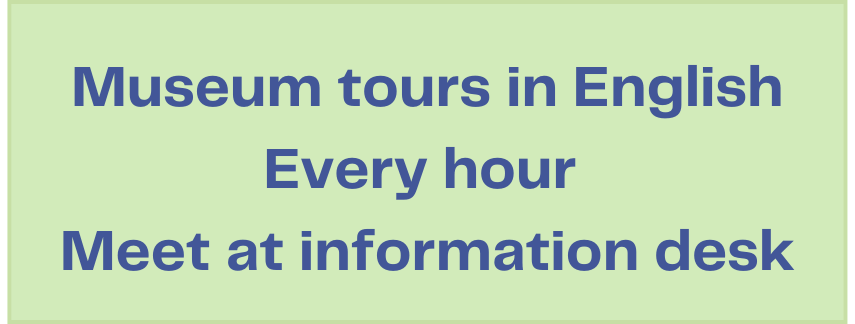
=> Answer:
What does this notice say?
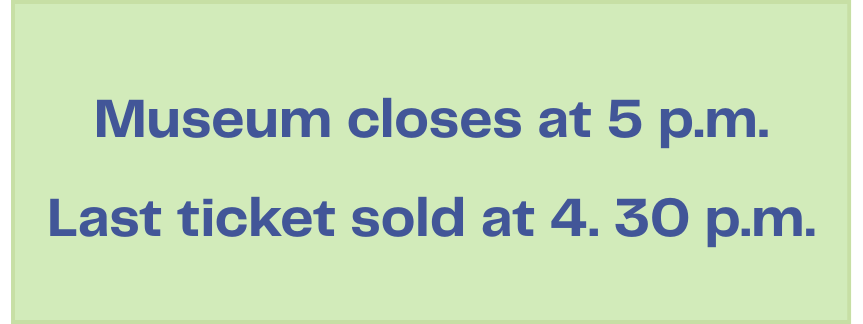
=> Answer:
What does this notice say?
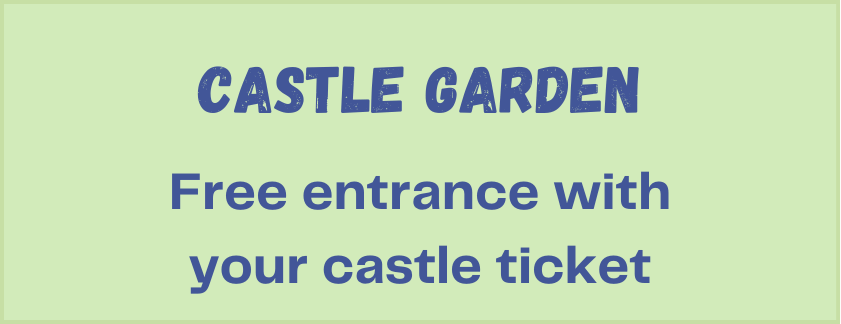
=> Answer: