Đề ôn luyện PSA phần Tiếng Anh vào 6 THCS Ngoại ngữ năm 2025 - Đề số 23
9/5/2023 6:00:00 AMWe were walking _____ the old house when a man suddenly appeared.
- past
- across
- through
You ought to stand _____ your little brother when the others tease him.
- over
- up to
- up for
- whose
- whom
- which
- passage
- access
- doorway
A: _____ you like to have some chicken with us, Bill?
B: No, thank you. I’m not very hungry right now.
- Would
- Does
- Can
The English spoken in Canada is similar _____ the United States.
- to these in
- with that of
- to that of
I found a _____ box in the garage filled with old toys yesterday.
- big square wooden
- square wooden big
- square big wooden
That skirt _____ 200 dollars yesterday but is now on offer at half price.
- is
- will be
- was
Read the text and choose the best answer to fill in the blanks.
Culture has a strong on non-verbal communication. Even the simple act of looking someone in the eye is not at all that simple. In the USA, Americans are to look directly at people when speaking to them. It shows interest in what they are saying and is thought to carry a of honesty. Meanwhile, in Japan and Korea, people avoid long periods of eye contact. It is considered more polite to look to the side during a conversation. The Lebanese, , stand close together and look intensely into each other’s eyes. The action shows sincerity and gives people a better sense of what counterparts want.
In every culture, gestures such as nodding, smiling, or even crossing arms can carry different meanings depending on the context and the relationship. Given such differences with even the most common expressions, people who travel or work abroad have a real need to learn the other’s culture’s body language. People tend to be unaware the messages they are sending to others. So, it is to consider your own body language before dealing with people from other cultures. Knowing about the body language of friends, clients, and colleagues can be very helpful in improving understanding and avoiding miscommunication.
Read and choose the correct answer.
Halloween is a holiday celebrated on October 31st every year. It has a rich history and is filled with fun and spooky traditions. People all over the world join in the festivities, especially in the United States and Canada. Halloween has its origins in ancient Celtic traditions. It marks the end of the harvest season and the beginning of winter. People believe that on this night, the boundary between the living and the dead becomes thin, and ghosts will visit the earth. To scare away these spirits, people dress in scary costumes and light bonfires.
Today, Halloween is a time for dressing up in costumes, often as witches, ghosts, or monsters, and going trick-or-treating. Children visit neighbors' houses, saying, "Trick or treat!" to get candies. In addition to trick-or-treating, there are many organized activities during Halloween. Haunted houses are popular attractions where people can experience spooky fun. Pumpkin carving is another tradition, where people carve scary faces on pumpkins and place candles inside to create jack-o'-lanterns. Many Halloween celebrations also include pumpkin decorating contests, where families and friends compete to create the most creative or frightening designs.
Halloween has also become a time for businesses to sell costumes and decorations. In fact, Halloween is the second-largest commercial holiday in the United States, right after Christmas, with people spending billions of dollars on costumes, candy, and decorations. In the past, Halloween wasn’t just about dressing up and getting sweets; it had a long history connected to cultures and beliefs. One interesting tradition is the practice of wearing masks and costumes to hide from evil spirits, which is still seen in some parts of the world today. But nowadays, Halloween is mostly about fun and entertainment.
What is the main idea of the passage?
- Halloween in the United States and Canada
- Reasons for the commercialization of Halloween
- The origin of Halloween and its activities
When does Halloween take place?
- On December 25th
- On October 31st
- On November 1st
Which statement is NOT true about Halloween?
- Halloween originates from Celtic culture.
- Halloween is the time when winter ends.
- Halloween is when people dress to frighten spirits.
What is "jack-o'-lantern"?
- The name of a demon
- A traditional outfit
- A lamp made from pumpkins
What commercial fact is mentioned about Halloween in the U.S.?
- It ranks second in consumer spending.
- It surpasses Valentine’s Day in candy sales.
- It's the most expensive holiday of the year.
Choose the correct answers in the box to complete the conversation. Write only the letter A-D in each blank.
|
A. Great, thanks for your help! B. It’s near the school, just a short walk from here. It’s a great place if you enjoy reading. C. The restaurants are expensive but delicious. D. Excuse me, do you know if there’s a bank nearby? |
Sam:
Sophie: Yes. Just down the road on Oak Avenue. It’s right next to the police station, you can’t miss it.
Sam: Thanks. And what about a library? I need to check out a book.
Sophie: There’s a library on Elm Street.
Sam: Okay, got it. Is there a restaurant around here? I’m feeling a little hungry.
Sophie: Yes, there are several on Maple Street. They’re all right near the post office, so you should have no trouble finding one.
Sam:
Sophie: No problem. Enjoy your day!
Choose the sentence that is CLOSEST in meaning to the sentence given.
Tom is more ambitious than his elder sister.
- Tom's elder sister is more ambitious than he is.
- Tom's elder sister is not as ambitious as he is.
- Tom is as ambitious as his elder sister.
Choose the sentence that is CLOSEST in meaning to the sentence given.
Helping a neighbor with their groceries is a nice gesture from you.
- You should help neighbors because groceries are heavy.
- You can offer to help neighbors carry their groceries as a good action.
- It’s kind of you to lend a hand with a neighbor’s groceries.
Choose the sentence that is CLOSEST in meaning to the sentence given.
They got bored with doing the same work over and over again.
- They lost their interest in doing the same work over and over again.
- Doing the same work over and over again made them addicted.
- They found the work more interesting after doing it over and over again.
Choose the sentence that is CLOSEST in meaning to the sentence given.
At the end of his speech, the student thanked his parents.
- The student ended his speech by expressing his gratitude towards his parents.
- Being grateful to his parents, the student made a speech after all.
- Before showing his thanks to his parents, the student finished his speech.
Read and do the following tasks.
A. They will teach you before you start the job.
B. They will give you something to wear.
C. The store is looking for temporary staff.
D. You can stay here without paying.
E. Staff members are needed to work with teenagers.
F. You have to work with children here.
What does this notice say?

=> Answer:
What does this notice say?
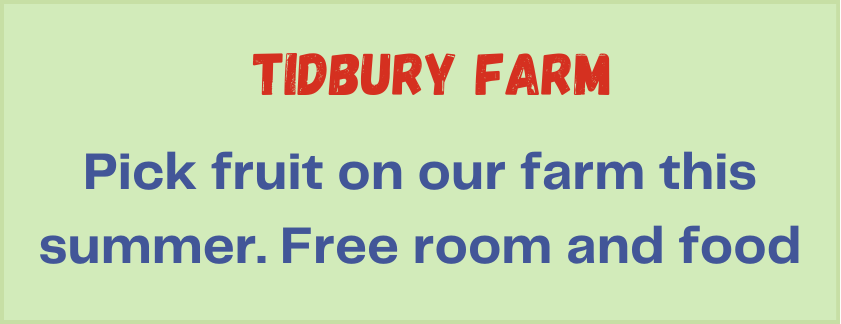
=> Answer:
What does this notice say?
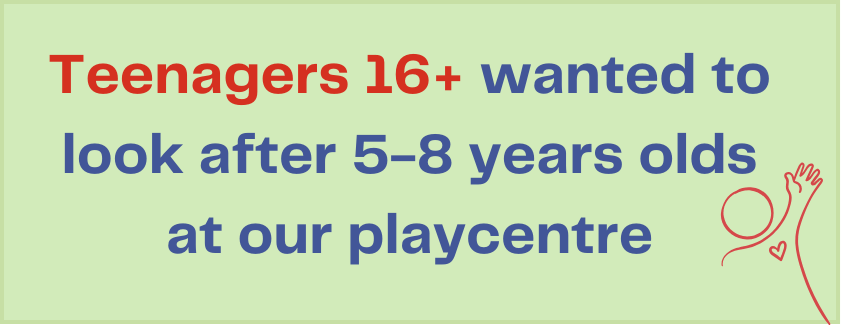
=> Answer:
What does this notice say?

=> Answer: