Đề số 18 ôn luyện bài PSA phần Tiếng Anh vào 6 trường THCS Ngoại ngữ
2/12/2025 7:00:00 AMEverybody at the party _____ a wonderful time last Saturday, _____?
has / haven't they
have / don't they
had / didn't they
Marie Curie is one of _____ female scientists who have won the Nobel Prize in science.
a few
the few
few
When I rang Oanh some time last week, she said she was busy _____ day.
- this
- that
- the
I wonder how long _____ to finish the project.
took it
it took
did it take
David's school _____ is very bad this term.
- report
- period
- day
Before a judge takes a decision, he has to take all the evidence into _____.
- consideration
- deliberation
- exemplification
In some places, you must _____ glass by colour when you want to recycle it.
- separate
- store
- shrink
Compared to conventional heating, underfloor heating systems _____ far less fuel and are therefore also more eco-friendly.
- consume
- harvest
- emit
Choose the correct answer in the box to complete the conversation. Write only the letter A-D in each blank.
Girl: Hello, David. I saw you at the field behind the school yesterday.
Boy: Hi, Bella. I had football training there.
Girl: Oh, did you enjoy it?
Boy: No, that was my first time. Yeah, I enjoyed the training session, but I don't think I was very good.
Girl:
Boy: Those guys are so fit! Seriously, I really struggled to keep up. And a couple of times I didn't manage to catch the ball. I think everyone was disappointed in me.
Girl: But all players feel like that at first.
Read the text and choose the best answer to fill in the blanks.
GOING ON A DIET
A typical person needs about 1,800 calories per day to stay running. They keep your organs operating and your brain running. They also keep your body warm. A person weight because he or she consumes more calories per day than necessary. The only way to lose fat is to reduce the number of calories that you consume per day. This is the basic principle behind going on a diet.
Unfortunately, diets don’t work for most people. They do lose weight but then go off the diet and put it back. Building a sensible diet and exercise plan is the key maintaining a consistent weight. You need to figure out how calories you need in a day and how many you actually take in. The next step is to add exercise so that you can raise the number of calories you can consume per day.
Burning 250 or 500 calories per day can make a big difference. You can ride an exercise bike while you are watching television or you can take the stairs instead of the elevator. Find an exercise partner. Exercises can be a lot easier if there is to talk to. It’s a good idea to wear form-fitting clothes if you are on a diet. Tight clothing acts as a reminder of what you are trying .
Read the following passage and choose the correct answer to each of the questions.
Most students are taught that mistakes are something to avoid. But scientists who study how the brain works have found the opposite to be true - making an error may actually be one of the most effective ways to learn.
When a person answers a question incorrectly, the brain does not simply move on. Instead, it works harder. Research shows that after making a mistake, the brain forms stronger memory connections around the correct information, making it far less likely to forget it a second time. In other words, the moment of getting something wrong is often the moment real learning begins.
This helps explain something that teachers have noticed for years: students who struggle early with a difficult subject sometimes outperform those who found it easy at first. Difficulty, it turns out, creates the conditions the brain needs to retain information deeply.
The history of everyday inventions offers a similar lesson. In the 1960s, a scientist at the company 3M developed a glue that was considered useless - it simply would not stick permanently. Years later, a colleague realised that this "failed" adhesive was perfect for a note that could be attached and removed without leaving a mark. The result was the Post-it note, now found in offices and classrooms around the world.
What both examples suggest is that failure is not the end of a process. It is often where the most useful part begins.
What is TRUE according to paragraph 1?
The scientists' findings directly challenge what most students have been taught.
The scientists' findings confirm exactly what most students have been taught.
The scientists only studied students who already agreed that mistakes are useful.
According to paragraph 2, how does the brain respond when a person answers incorrectly?
- It identifies where the error occurred so the same question can be approached differently.
- It focuses on the error itself to make sure the same mistake is never repeated.
- It works harder than usual to store the correct information more securely.
What can be inferred from paragraph 3 about the role of difficulty in learning?
- Students who find a subject easy may be forming weaker memory connections than those who struggle.
- Students who struggle early are unlikely to ever catch up with classmates who found the subject easy.
- Students who struggle early may actually develop a deeper understanding of the subject over time.
Why does the author mention the invention of the Post-it note in paragraph 4?
- To suggest that recognising a mistake's value often requires someone other than the original inventor.
To show that the best inventions come from deliberately improving an earlier mistake rather than abandoning it.
To illustrate that a product considered useless can later become the foundation of a new idea.
Which of the following best summarises the author's final conclusion about failure?
- It is most useful when teachers guide students toward the correct answer before moving on.
- It marks the beginning of the most productive stage in both learning and creative work.
- It matters more in creative fields like invention than in formal academic environments.
Read and do the following tasks.
A. There are two ways to get tickets for this.
B. Use this if you are going up to one of these apartments.
C. This facility serves all apartments in the building.
D. If you'd like to see this place from the air, go in the morning.
E. Phone this company if you want to go to the airport.
F. This service operates every weekday at the same time.
What does this notice say?

=> Answer:
What does this notice say?

=> Answer:
What does this notice say?
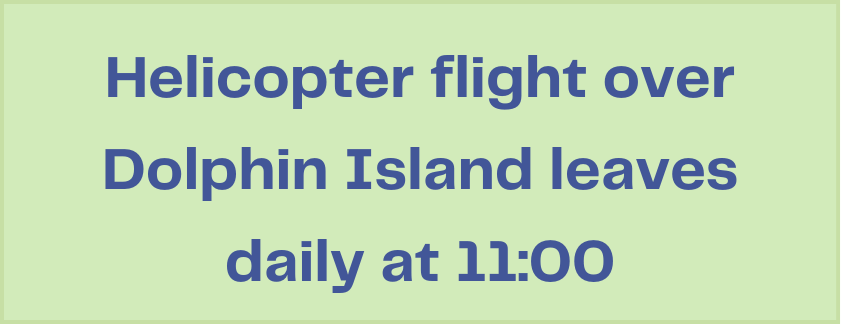
=> Answer:
What does this notice say?
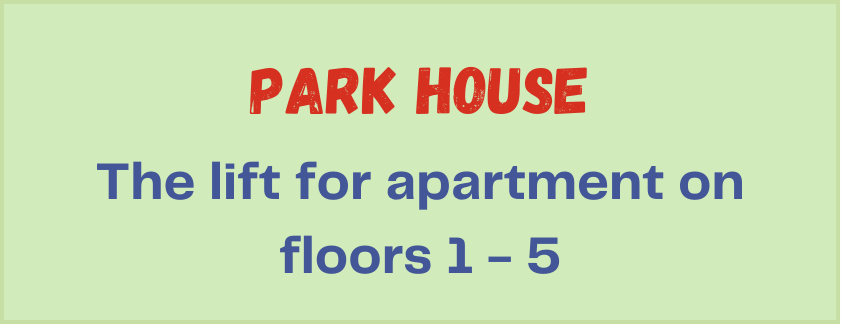
=> Answer:
Choose the sentence that is CLOSEST in meaning to the sentence given.
The young singer's career took off after her latest album topped the charts.
- The young singer took some time off from her career right after her latest album reached the top position.
- The young singer experienced great success following the number-one position of her recent album.
- To make her latest album top the charts, the young singer had to take her career off the ground.
Choose the sentence that is CLOSEST in meaning to the sentence given.
Even though we sometimes argue, my brother and I generally get along with each other.
- My brother and I never argue because we generally have a very good relationship.
- My brother and I mostly have a good relationship despite having occasional arguments.
- My brother and I get along well because we have learned not to argue with each other.
Choose the sentence that is CLOSEST in meaning to the sentence given.
The lion dance performed by our team amazed all the spectators.
- Our team was amazed by the large crowd of spectators who came to see the lion dance.
- Everyone watching the lion dance given by our team was greatly impressed.
- All the spectators were amazed that our team was able to perform a lion dance.
Choose the sentence that is CLOSEST in meaning to the sentence given.
After the surprise birthday party, he was clearly on cloud nine and couldn’t stop smiling.
- Following the surprise birthday party, he was obviously extremely happy and kept smiling.
- He was over the moon because he tried to keep smiling throughout the surprise birthday party.
- He couldn't stop smiling until the surprise birthday party made him feel like he was very happy.