Milking Cows
10/10/2020 6:12:00 PM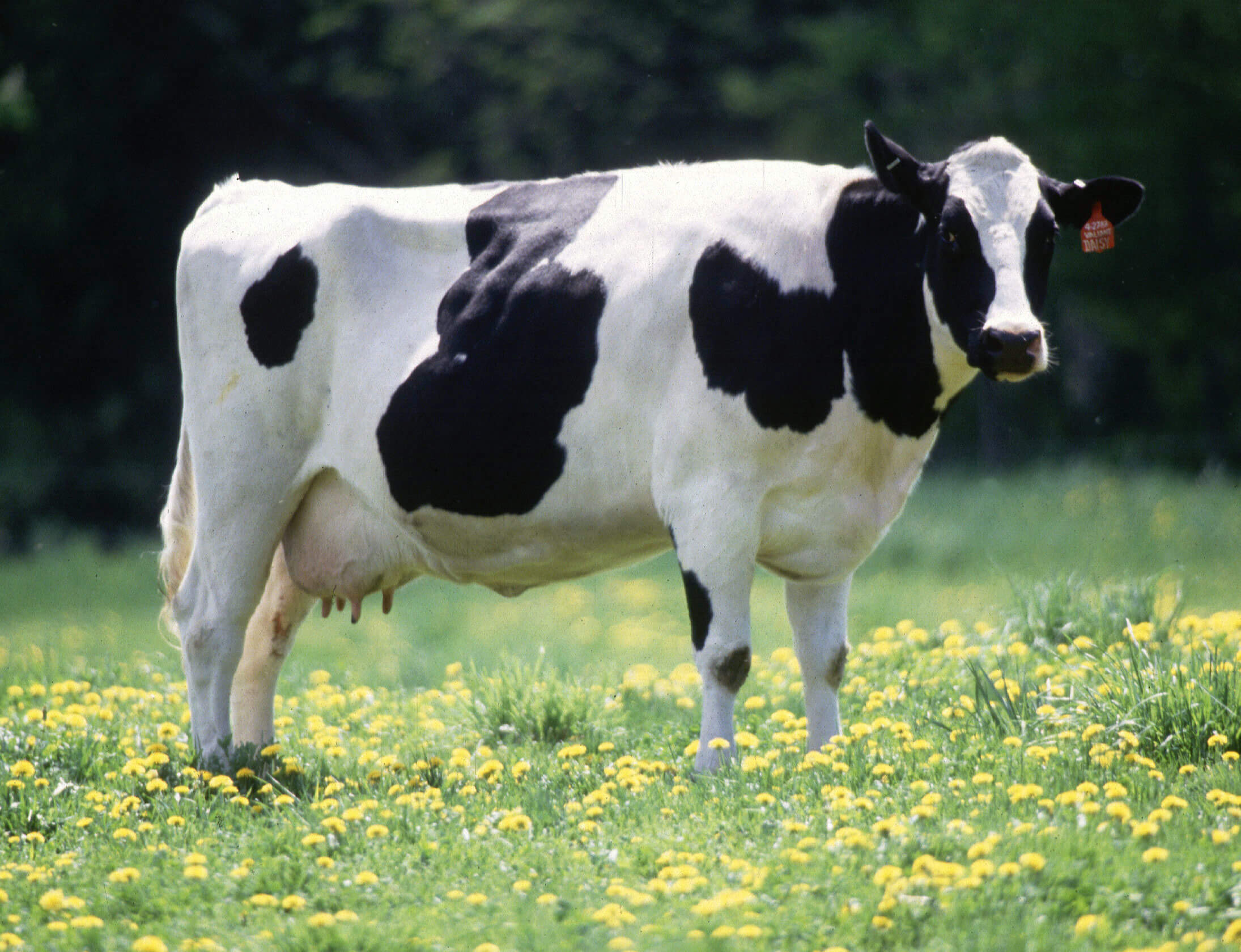
Do you know?
- An average dairy cow produces 7 to 9 gallons of milk a day.
- The greatest amount of milk produced in one year was 59,298 pounds by a Holstein cow named Robthom Sue Paddy.
Let's explore more in the following passage!
FACT: An average Holstein dairy cow weighs about 1,500 pounds.
Listen and choose the correct answer.
- The first cow arrived in America in _____.
- Which part of the modern machines makes the milk clean?
The first cow arrived in America in _____.
- 1610
- 1612
- 1611
Which part of the modern machines makes the milk clean?
- tanks
- hoses
- pots
Complete the text you are listening to by dragging the correct word to each blank.
Cows first came to America in 1611. Each farming family usually kept its own cow. A family member would the cow each day. It gave them milk to drink. They had to milk the cows . The milk then was boiled in a big pot over the fire. It then had to cool, and after that, someone the cream off the top of the pan.
raise and milk cows for us. For hundreds of years, farmers spent many hours milking. Farmers, or their family members, sat on stools to milk from the cows’ udders. This chore was and tiring.
Today’s farmers use machines to help with milking. They can milk many cows at one time. The machines often do a better job milking than a person could.
These modern machines have long, clear hoses. The hoses carry milk to big metal tanks. The tanks hold and clean the milk. These machines help farmers milk enough cows for us all to have milk in our homes.
Read and answer the following questions.
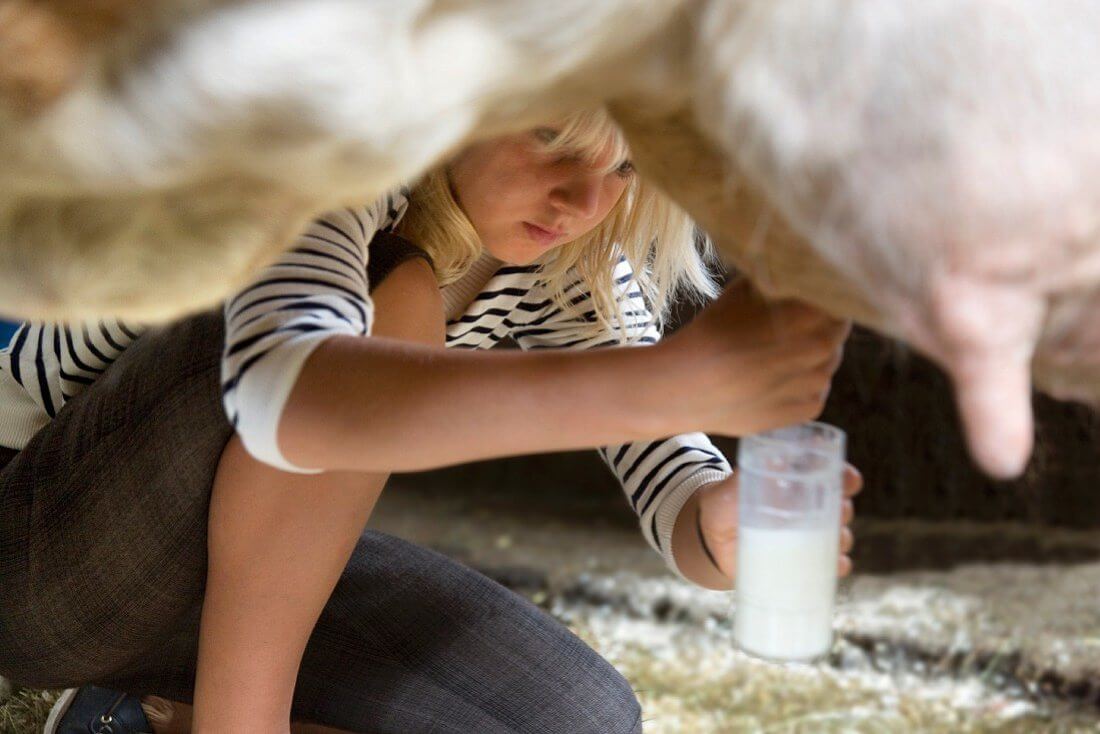
Cows first came to America in 1611. Each farming family usually kept its own cow. A family member would milk the cow each day. It gave them milk to drink. They had to milk the cows by hand. The milk then was boiled in a big pot over the fire. It then had to cool, and after that, someone skimmed the cream off the top of the pan.
Dairy farmers raise and milk cows for us. For hundreds of years, farmers spent many hours milking. Farmers, or their family members, sat on stools to squeeze milk from the cows’ udders. This chore was time-consuming and tiring.
Today’s farmers use machines to help with milking. They can milk many cows at one time. The machines often do a better job milking than a person could.
These modern machines have long, clear hoses. The hoses carry milk to big metal tanks. The tanks hold and clean the milk. These machines help farmers milk enough cows for us all to have milk in our homes.
Source: Daily Warm-ups Reading Grade 3
What is NOT a step in the process of making milk to drink in the past?
- Taking milk from cows
- Boiling the milk
- Skimming the cream
- Putting the milk in fridge
- Farmers can milk cows much faster.
- Farmers can run faster.
- Farmers can plow fields faster.
- Farmers can drive tractors faster.
What is the main idea of the last paragraph?
- Modern equipment is expensive for farmers.
- Cows have four digestive compartments.
- Cows make wonderful household pets.
- Modern equipment helps farmers.
- How to care for a cow
- How technology has changed milking cows
- How to search for information about cows
- How to plan an interview with a farmer
Put the right word in each blank. The sentences are from the text.
- raise and milk cows for us.
- A family member would the cow each day. They had to milk the cows .
- Farmers, or their family members, sat on stools to milk from the cows’ udders. This chore was and tiring.
- After that, someone the cream off the top of the pan.
Put the right word in each blank. These are new sentences for the words in the text.
- This has 100 cows.
- Producing a dictionary is a very job.
- a cow by hand is a skilled process.
- Cut the lemon in half and the juice into the bowl.
- All of our rugs are made in Pakistan.
- Strain the cooking liquid and off the fat.