Who Made the First Globes?
10/10/2020 3:24:00 PM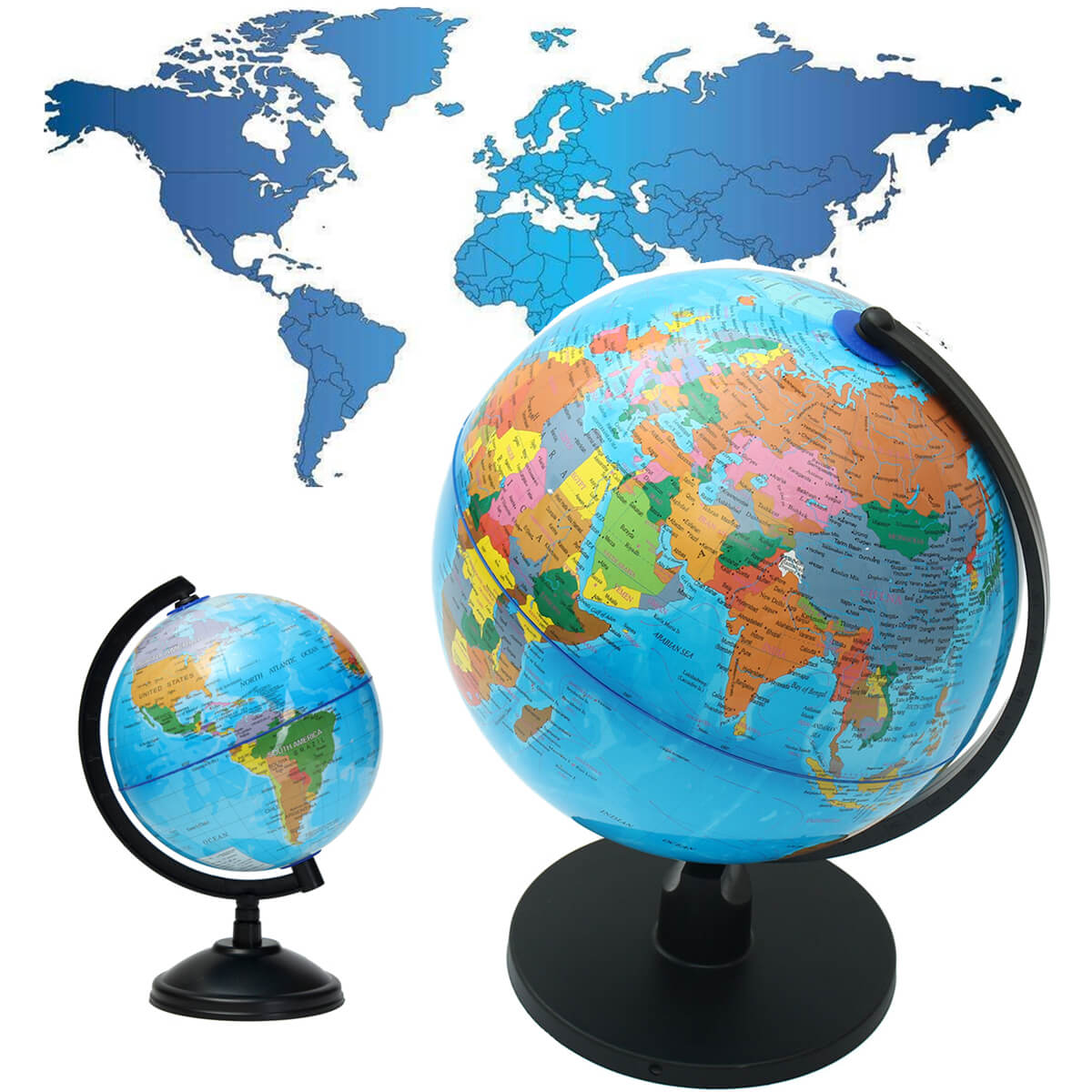
Do you know?
- A globe is a three-dimensional spherical model of the Earth.
- The first globe did not contain all continents of the Earth.
Let's explore it!
FACT: The term globe is derived from "globus", a Latin word meaning a sphere or round mass.
Listen and choose the correct answer to each of the following questions.
- According to the audio, what can NOT spin?
- When was the first globe created?
- globes
- the Earth
- flat maps
- around 200 B.C.
- around 300 B.C.
- around 400 B.C.
Complete the text you are listening to by dragging the correct word to each blank.
Who Made the First Globes?
Written by Neil H.
Maps are flat, but the Earth is round.
How do we see the Earth's shape? We use globes. They're 3-D maps!
Globes are colorful. The blue parts are water. The green parts are land.
Some globes are . Others are .
They show mountains and hills. They show deserts and forests. Many globes spin — just like the Earth spins!
Where do globes come from? Who made them? Let's try to find out.
Globes show us all of the Earth. The first globes did not. They only showed parts of it.
Around 200 B.C., Crates made the first . He lived in Cilicia. (Today, Cilicia is in the country of Turkey.) His globe showed Earth . Countries had different names. Whole were missing.
Those globes are gone.
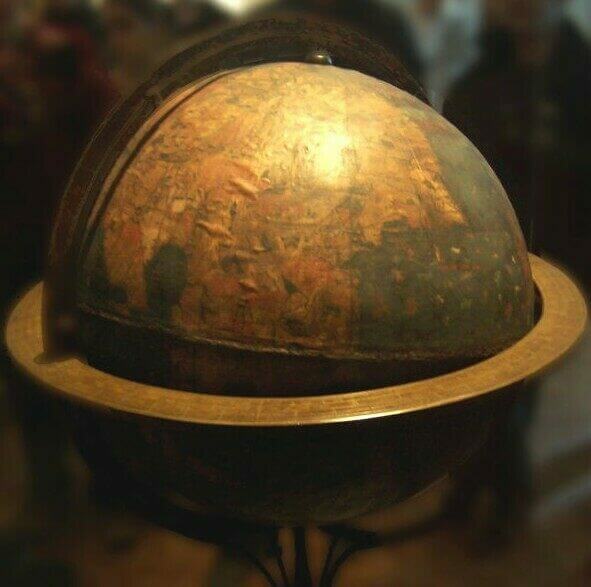
The oldest we still have is from 1492. Martin Behaim in Germany made that globe.
Christopher Columbus sailed to America in 1492. It was an exciting time. Globes would change forever after that.
Read the passage and answer the questions.
Who Made the First Globes?
Written by Neil H.
Maps are flat, but the Earth is round.
How do we see the Earth's shape? We use globes. They're 3-D maps!
Globes are colorful. The blue parts are water. The green parts are land.
Some globes are smooth. Others are rough.
They show mountains and hills. They show deserts and forests. Many globes spin — just like the Earth spins!
Where do globes come from? Who made them? Let's try to find out.
Globes show us all of the Earth. The first globes did not. They only showed parts of it.
Around 200 B.C., Crates made the first globe. He lived in Cilicia. (Today, Cilicia is in the country of Turkey.) His globe showed Earth differently. Countries had different names. Whole continents were missing.
Those ancient globes are gone.
The oldest we still have is from 1492. Martin Behaim in Germany made that globe.
Christopher Columbus sailed to America in 1492. It was an exciting time. Globes would change forever after that.
Source: Mobymax Reading Stories G1.7-1.9
- flat maps of a small part of the Earth
- 3-D maps of the entire Earth
- 3-D maps of some small parts of the Earth
- flat maps of the entire Earth
- 2
- 3
- 4
- 5
According to the passage, globes may NOT show _____ of the Earth.
- the weather
- the color
- the land
- the movement
- The first globe and its remarkable features
- The comparison of ancient globes and modern ones
- The characteristics of globes and their history
- The evolution of globes and some ways to make them
Put the right word in each blank. The sentences are from the text.
- Some globes are . Others are .
- Around 200 B.C., Crates made the first .
- His globe showed Earth .
- Whole were missing.
- Those globes are gone.
Put the right word in each blank. These are new sentences for the words in the text.
- She spun the , and pointed to the Solomon Islands.
- The road ahead was flat and .
- People have lived in this valley since times.
- He didn't really behave any around his family.
- It was a mountain road, full of stones and huge holes.
- There are seven in the world.