Foods from Around the World
1/28/2022 8:41:07 PM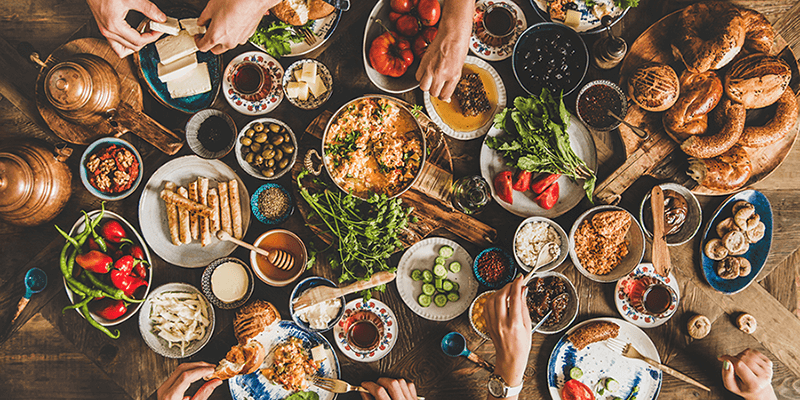
Do you know?
- Most countries and regions in the world have their own particular cuisine. Different types of cuisines involve certain cooking practices, local ingredients, and a combination of spices.
- Food experiences can depend on your nationality and religion as well.
Let's explore more about some food experiences!
Let's learn some new words before you read the passage:
Listen and complete the passage.
| dairy | originates | sample | familiar |
| sacred | pleasant | absolutely |
Foods that are well known to you may not be to people from other countries. Here are four people’s experiences with foreign food.
Shao Wong is a student in France. He comes from China. “I’d never tasted cheese or even milk before I came here. Cattle are rare in my part of China, so there are no products. I tried milk when I first arrived in France. I hated it! I sampled cheese too, but couldn’t manage more than one bite. I love ice cream, though, and that’s made from milk.”
Birgit is from Sweden. She traveled to Australia on vacation. “I was in a restaurant that specialized in fish, and I heard some other customers order flake. So I ordered some too and it was delicious. Later, I found out that flake is an Australian term for shark. After that experience, whenever I see a new food I try it out on purpose. You know why? I remember how much I enjoyed flake.”
Chandra is a dentist in Texas. She from India. “I’m frightened of eating new foods because they might be made from beef. I’m Hindu, and my religion forbids me to eat meat from the cow. It’s a animal to Hindu, so that’s the reason I can’t eat hamburgers or spaghetti with meatballs.”
Nathan is American. He taught for a year in China. “My friends gave me some 100-year-old eggs to eat. I didn’t like the look of them at all. The insides were green, but my friends said the color was normal. The Chinese put chemicals on fresh eggs. Then they bury them in the earth for three months. So the eggs weren’t really very old. Even so, I refused to touch them.”
Life in a new country can be scary, but it also can be fun. Would you a 100-year-old egg? Would you order shark in a restaurant?
Read and answer the following questions.
Food from Around the World
Foods that are well known to you may not be familiar to people from other countries. Here are four people’s experiences with foreign food.
Shao Wong is a student in France. He comes from China. “I’d never tasted cheese or even milk before I came here. Cattle are rare in my part of China, so there are no dairy products. I tried milk when I first arrived in France. I hated it! I sampled cheese too, but couldn’t manage more than one bite. I love ice cream, though, and that’s made from milk.”
Birgit is from Sweden. She traveled to Australia on vacation. “I was in a restaurant that specialized in fish, and I heard some other customers order flake. So I ordered some too and it was delicious. Later, I found out that flake is an Australian term for shark. After that pleasant experience, whenever I see a new food I try it out on purpose. You know why? I remember how much I enjoyed flake.”
Chandra is a dentist in Texas. She originates from India. “I’m frightened of eating new foods because they might be made from beef. I’m Hindu, and my religion forbids me to eat meat from the cow. It’s a sacred animal to Hindu, so that’s the reason I can’t eat hamburgers or spaghetti with meatballs.”
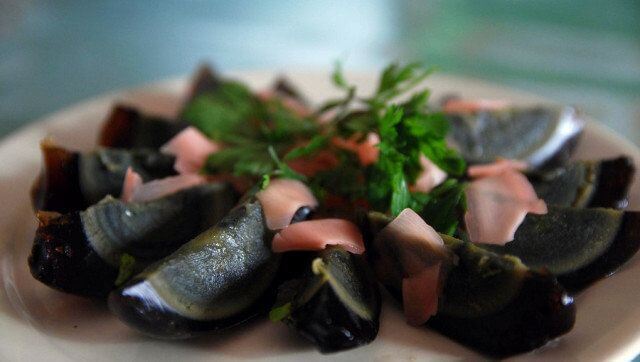
Nathan is American. He taught for a year in China. “My friends gave me some 100-year-old eggs to eat. I didn’t like the look of them at all. The insides were green, but my friends said the color was normal. The Chinese put chemicals on fresh eggs. Then they bury them in the earth for three months. So the eggs weren’t really very old. Even so, I absolutely refused to touch them.”
Life in a new country can be scary, but it also can be fun. Would you sample a 100-year-old egg? Would you order shark in a restaurant?
Source: Thoughts and Notions
What foods did Shao Wong sample when he first arrived in France?
- Beef
- Hamburgers
- Milk
- Cheese cakes
Why was Chandra frightened of trying a hamburger?
- Because she had unpleasant experiences with hamburgers.
- Because she thinks hamburgers are not good for her health.
- Because it contains a forbidden kind of meat in her religion.
- Because she is allergic to some ingredients in hamburgers.
Which of the following is NOT true according to the passage?
- Birgit had a good experience eating shark meat.
- There are few cattle in Shao Wong's hometown.
- Nathan tried 100-year-old eggs while in China.
- Chandra is an Indian dentist who works in Texas.
What is the main idea of the passage?
- Many people dislike eating new foods because of their religion.
- Foods that are familiar to one might be unfamiliar of others.
- Travelling is a good way to learn about new foods in the world.
- Experiences about new cuisines in the world are mostly pleasant.
Build your vocabulary by learning these intensive phrases/idioms
Complete the second sentence so that it has a similar meaning to the first one, using the word in a bracket. You must use between THREE and FIVE words, including the word given. Do not change the word given.
Although her second novel was rejected by the published, she considered it a learning experience and began another one. (PUT / DOWN)
=> When her second novel was rejected by the publisher, she and began another one.
Complete the second sentence so that it has a similar meaning to the first one, using the word in a bracket.
1. "You are not allowed to smoke in your room, Dick", said his mother. (FORBID)
=> Dick's mother in his room.
2. "I don't agree to forgive Daniel because of his lies", Lisa said. (REFUSE)
=> Lisa Daniel because of his lies.
3. I was scared to walk home alone in the dark. (FRIGHTENED)
=> I home alone in the dark.
Some people may remain well; _____, they are able to infect others.
- even so
- because of
- due to
Choose the correct answer.
He specializes in large dogs such as Irish wolfhounds.
Rearrange the words in the correct order to make a complete sentence.
Use the set of words to write a meaningful sentence. Make all changes and additions if necessary.
She/give/a couple/pounds/the beggar/yesterday.
=>