Horses
12/23/2021 9:10:00 PM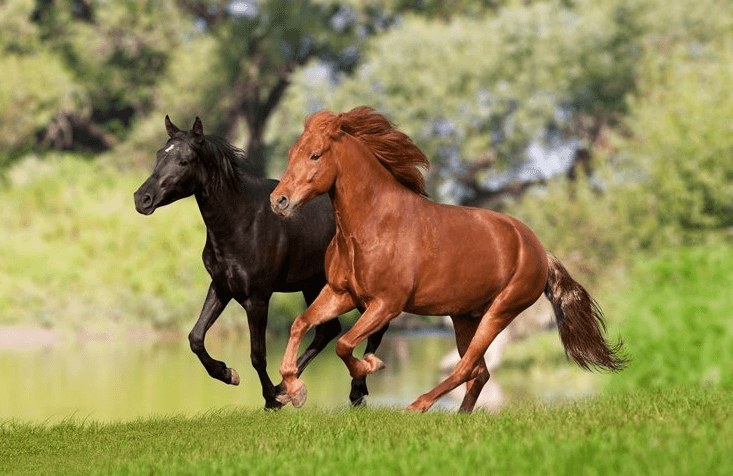
Do you know?
- Horses are “obligate nose breathers” meaning that they can only breathe through their nose, not through their mouth as humans can.
- Horses have exceptional vision! They have near 360-degree vision but do however have blind spots directly in front and behind them.
Let's explore more about this animal!
Let's learn some new words before you read the passage:
Listen to the passage Horses and complete the sentences by dragging the correct word to each blank.
Horses
Did you know horses are in the same family as donkeys, zebras, and ? It is true. Horses are in the Equus family. Their name comes from a Greek word. It means quick.
There are over 350 kinds of horses. They are divided into four main groups: the “light” horses, the “heavy” horses, ponies, and wild or semi-wild horses. “Light” horses have small bones. They weigh less than 1,300 pounds (590 kg). They have thin legs. “Heavy” horses are strong and have big bones. They also have sturdy legs. “Heavy horses” can weigh up to 2,000 pounds (907 kg).
Ponies are no taller than 58 inches (147 cm). If you measure in horse language, one would measure in hands. Ponies, then, are no more than 14½ hands tall. Wild or semi-wild horses have not been . These horses do not live with people. They live in the open fields and run free.
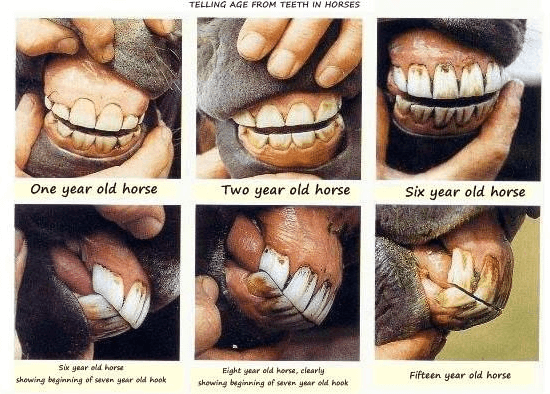
A person can tell the age of a horse by checking its teeth. Its age can only be checked by its teeth before it is ten years old. All horses have small stomachs. They must eat small amounts of food throughout the day.
All horses love to eat short, grass. Horses that live outside will grass all day. If they live in a , they will on hay as often as it is given to them. If they are workhorses, they will eat better if the person feeding them gives them maize (corn), oats, or barley. It can be added to their regular food. They also enjoy treats.
All horses love to run, canter, gallop, walk, or trot.
Read and answer the following questions.
Horses
Did you know horses are in the same family as donkeys, zebras, and mules? It is true. Horses are in the Equus family. Their name comes from a Greek word. It means quick.
There are over 350 kinds of horses. They are divided into four main groups: the “light” horses, the “heavy” horses, ponies, and wild or semi-wild horses. “Light” horses have small bones. They weigh less than 1,300 pounds (590 kg). They have thin legs. “Heavy” horses are strong and have big bones. They also have sturdy legs. “Heavy horses” can weigh up to 2,000 pounds (907 kg).
Ponies are no taller than 58 inches (147 cm). If you measure in horse language, one would measure in hands. Ponies, then, are no more than 14½ hands tall. Wild or semi-wild horses have not been tamed. These horses do not live with people. They live in the open fields and run free.
A person can tell the age of a horse by checking its teeth. Its age can only be checked by its teeth before it is ten years old. All horses have small stomachs. They must eat small amounts of food throughout the day.
All horses love to eat short, juicy grass. Horses that live outside will nibble grass all day. If they live in a stable, they will munch on hay as often as it is given to them. If they are workhorses, they will eat better if the person feeding them gives them maize (corn), oats, or barley. It can be added to their regular food. They also enjoy treats.
All horses love to run, canter, gallop, walk, or trot.
Source: Daily Warm-ups Reading Grade 3
According to the passage, how many main groups of horses are there?
- 5
- 340
- 4
- 350
- mules, donkeys, and zebras
- mules, zebras, and cows
- donkeys, zebras, and buffaloes
- zebras, alligators, cows
Which of these is NOT mentioned in the passage?
- The meaning of the name "horse"
- The weight of "light" horses
- The lifespan of horses
- The favorite food of horses
What is the main idea of the passage?
- All horses love to eat grass and to run around.
- "Light" horses are lighter than any other horses.
- Horses have different groups and characteristics.
- Ponies are short horses which are no taller than 147cm.
Which can be inferred from the fifth paragraph?
- For horses, living in stables is more comfortable than living outside.
- It is much better to add corn to the regular meal of horses.
- Workhorses prefer maize, oats, or barley to other foods.
- Horses eat whatever the farmers give to them.
Build your vocabulary by learning these intensive phrases/idioms
Horses should be able to _____ on large plots of land.
- run dry
- run free
- run high
Complete the second sentence so that it has a similar meaning to the first one, using the word in a bracket. You must use between THREE and FIVE words, including the word given. Do not change the word given.
The cat hadn’t been fed for weeks and was too thin. (BAG / BONES)
=> The cat hadn’t been fed for weeks and become .
Choose the underlined part that needs correction.
He became a millionaire because he knew how to make hay when the sun shines.
- became
- millionaire
- how to
- when