How the Ancient Egyptians Told Time
12/17/2021 1:11:57 PM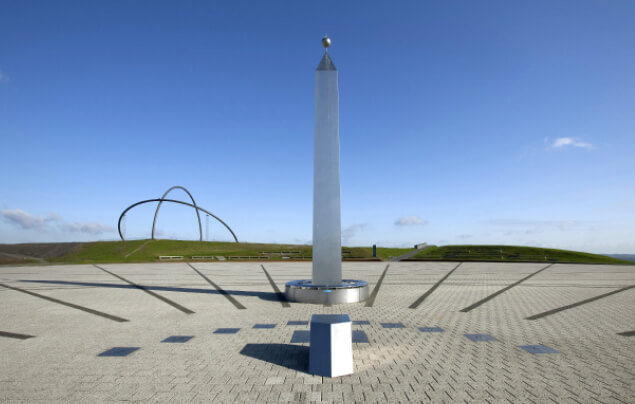
Do you know?
- The ancient Egyptians were one of the first ancient civilizations to divide a day into sections, so they could tell what time it was.
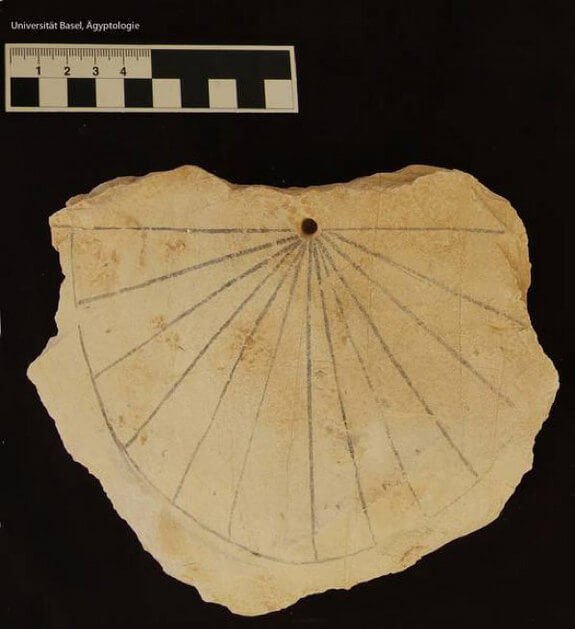
- Around 3,500 BCE, the Egyptians used shadow clocks to tell the time of day.
Let's explore how they measure time!
Let's learn some new words before you read the passage:
Listen to the passage How the Ancient Egyptians Told Time and complete the sentences by dragging the correct word to each blank.
How the Ancient Egyptians Told Time
Written by Hannah Buerano
A long time ago, people didn't have watches or clocks. Instead, people used the sun and shadows to tell time. They did this through the help of a sundial. The Egyptians were the first ones to the sundial. They placed a stick on the ground. It then a shadow that moved with the sun. It told the time when a day began!
The stick was called a gnomon. The word sounds a lot like "No, Mon." It needed to point to the true north, people said. If it did not point to the true north, the sundial's time would be very, very wrong. Oh no! At different times of the day, the gnomon's was at different positions. It landed on some numbers like one or two and maybe a little more until the day was through.
Did you know that the length of the shadow changed, too? The shadow was shortest at noon when the sun was high in the sky. It was the longest in the afternoon when the sun was just about to go. Goodbye!
Today, can still be seen all over the world. The dial's position is different everywhere you go because the Earth is not flat. The farther north you go, the longer the shadows will be. To see short shadows on a sundial, the south is where you need to be.
Read and answer the following questions.
How the Ancient Egyptians Told Time
Written by Hannah Buerano
A long time ago, people didn't have watches or clocks. Instead, people used the sun and shadows to tell time. They did this through the help of a sundial. The ancient Egyptians were the first ones to invent the sundial. They placed a stick on the ground. It then cast a shadow that moved with the sun. It told the time when a day began!
The stick was called a gnomon. The word sounds a lot like "No, Mon." It needed to point to the true north, people said. If it did not point to the true north, the sundial's time would be very, very wrong. Oh no! At different times of the day, the gnomon's shadow was at different positions. It landed on some numbers like one or two and maybe a little more until the day was through.
Did you know that the length of the shadow changed, too? The shadow was shortest at noon when the sun was high in the sky. It was the longest in the afternoon when the sun was just about to go. Goodbye!
Today, sundials can still be seen all over the world. The dial's position is different everywhere you go because the Earth is not flat. The farther north you go, the longer the shadows will be. To see short shadows on a sundial, the south is where you need to be.
Source: Mobymax Reading Stories G2.7-2.9
Based on the title alone, what is this article likely to inform you about?
- the type of home that ancient Egyptians lived in
- the tool that ancient Egyptians used to tell time
- the kind of crops that the ancient Egyptians grew
When there were no clocks and watches, what tool did people use to tell the time?
- a computer
- a sundial
- a compass
Which of the following is NOT mentioned in the passage?
- The inventors of sundials
- The operation of sundials
- The size of sundials
What can be inferred from paragraph 4?
- Every sundial is unique.
- The Earth changes its shape.
- Sundial is not common nowadays.
What is the main purpose of the passage?
- to explain why the Ancient Egyptians invented the sundial
- to prove that the sundial is a wonderful invention
- to inform about the sundial and how it works
Build your vocabulary by learning these intensive phrases/idioms
Rewrite the sentence so that it has a similar meaning to the original one.
It is necessary for all of us to wear white shirts at the meeting. => All of us need .........
Choose the underlined part that needs correction.
The fastest the car is, the more dangerous it is to drive.
- fastest
- is
- more dangerous
- to drive
We arrived just as the ceremony was about _____.
- beginning
- begin
- to begin
Choose the word(s) CLOSEST in meaning to the underlined word(s).
Forest conservation is an important issue all over the world.
- around the world
- worldwide
- across many countries
- nationwide