The Turing Test
1/15/2022 9:42:48 AM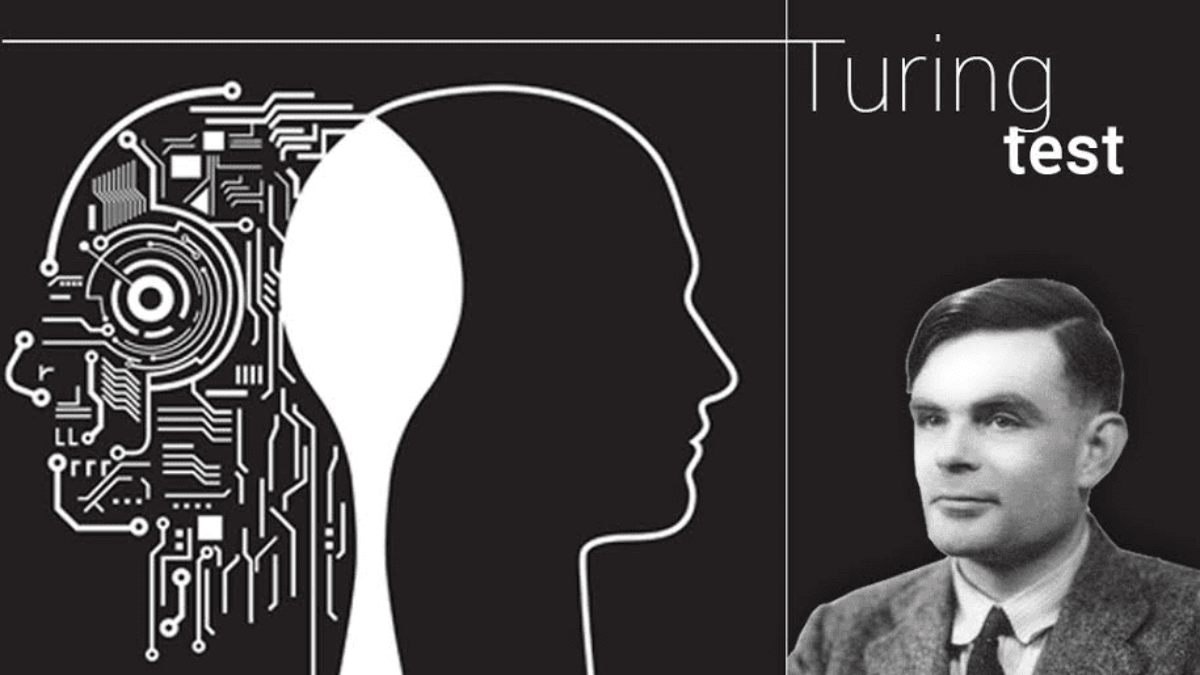
Do you know?
- Turing test, in artificial intelligence, was a test proposed (1950) by Alan M. Turing to determine whether a computer can “think.”
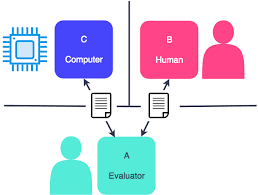
- The original Turing Test requires three terminals, each of which is physically separated from the other two. One terminal is operated by a computer, while the other two are operated by humans.
Let's explore more in the following passage!
Let's learn some new words before you read the passage:
Listen to the passage The Turing Test and complete the sentences by dragging the correct word to each blank.
Does talking to a computer sound ? How would you feel if you thought you were talking to a human, and it turned out to be a computer? Would you be surprised? In 1950, a British named Alan Turing wondered if that could really happen. He if computers could be taught to think. To find out, he created the Turing Test.
During the Turing Test, a human judge talked to both a human and a computer. The then had to decide which was the human. Sounds easy, right? Not really. Some computers have been taught to sound just like humans.
How do scientists get computers to sound like humans? They teach computers how to answer common types of questions. For example, if you say, "Hello," the computer will reply, "Hello." If you say, "How are you?" the computer will say, "I’m fine." Computers are also taught other rules. For example, a computer will respond to a with, "OK."
A computer that is able to fool a human into thinking it is a real person is considered intelligent. Most intelligent computers only fool people 30 percent of the time. However, one computer by IBM is close to fooling people more often. The computer’s name is Watson. If you competed in a Turing Test against Watson, it may be hard to win.
You can take a Turing Test on the computer or compete in a real Turing Test competition. During a competition, you have a conversation. You do not know if that conversation is with a human or a computer. At the end of the conversation, you must guess which it is. If you guessed that the computer was a human, the computer passed the Turing Test.
Read and answer the following questions.
The Turing Test
Written by Stacy Zeiger
Does talking to a computer sound weird? How would you feel if you thought you were talking to a human, and it turned out to be a computer? Would you be surprised? In 1950, a British mathematician named Alan Turing wondered if that scenario could really happen. He wondered if computers could be taught to think. To find out, he created the Turing Test.
During the Turing Test, a human judge talked to both a human and a computer. The judge then had to decide which was the human. Sounds easy, right? Not really. Some computers have been taught to sound just like humans.
How do scientists get computers to sound like humans? They teach computers how to answer common types of questions. For example, if you say, "Hello," the computer will reply, "Hello." If you say, "How are you?" the computer will say, "I’m fine." Computers are also taught other rules. For example, a computer will respond to a command with, "OK."
A computer that is able to fool a human into thinking it is a real person is considered intelligent. Most intelligent computers only fool people 30 percent of the time. However, one computer developed by IBM is close to fooling people more often. The computer’s name is Watson. If you competed in a Turing Test against Watson, it may be hard to win.
You can take a Turing Test on the computer or compete in a real Turing Test competition. During a competition, you have a conversation. You do not know if that conversation is with a human or a computer. At the end of the conversation, you must guess which it is. If you guessed that the computer was a human, the computer passed the Turing Test.
Source: Mobymax Reading Stories G3.0-3.3
According to the passage, Alan Turing was a/an _____.
- archeologist
- mathematician
- chemist
- biologist
What motivated Alan Turing to create the Turing Test?
- his childhood dream
- his mere curiosity
- his financial burden
- his favourite movie
What does the author think about the Turing Test?
- She believes it posed a risk to humans.
- She considers it as a ridiculous project.
- She feels very suspicious about its result.
- She thinks it might be harder than expected.
Which of the following is NOT mentioned in the passage?
- Some answers by a computer like humans
- A name of an intelligent computer
- The number of participants in a Turing Test
- Several ways to do a Turing Test
Where is this passage likely to be seen?
- A literary website
- A scientific website
- A historical website
- A chemical website
Build your vocabulary by learning these intensive phrases/idioms
Make a complete sentence using the given words. Change the form of the words or add other words if necessary.
We are about to sign a contract after today’s meeting. (CLOSE)
=> We are ..................
Choose the underlined part that needs correction.
They don't sound confidently about the future of the industry.
- don't
- confidently
- about
- future
Choose the correct answer.
Read the small print in your contract to find exactly what you are insured for.
Rearrange the words in the correct order to make a complete sentence.
Make a complete sentence using the given words. Change the form of the words or add other words if necessary.
It is essential that you clean your room before going out. (MUST)
=> You .....