Tsunamis
8/4/2022 9:02:10 AM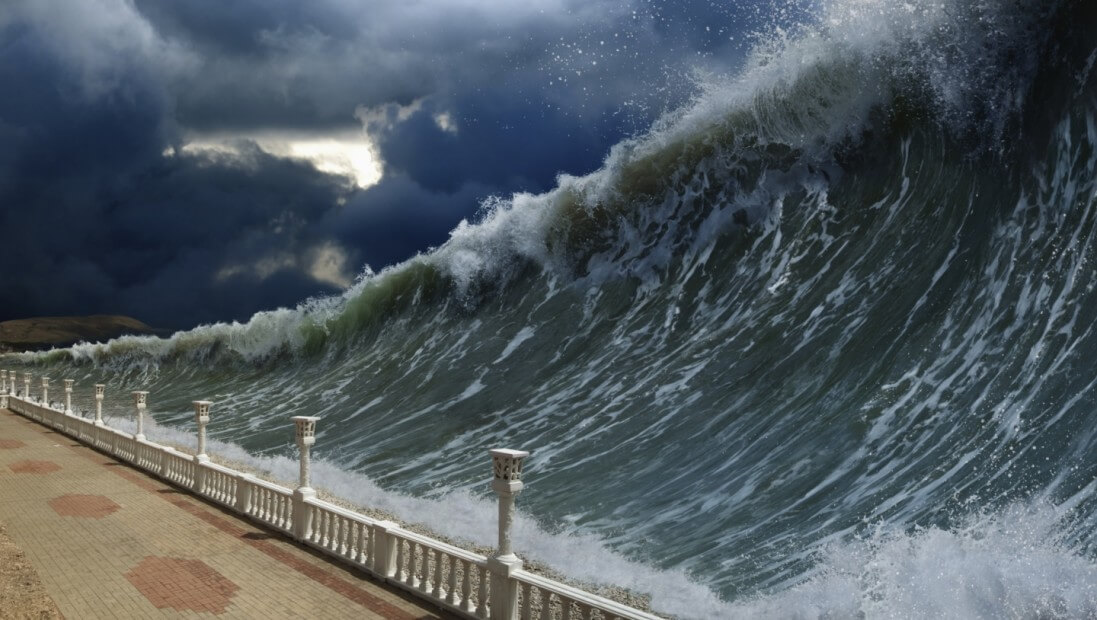
Do you know?
-
Tsunamis are large and powerful ocean waves that grow in size as they reach the shore. The first wave of a tsunami is usually not the strongest, successive waves get bigger and stronger.
-
About 80% of tsunamis happen within the Pacific Ocean’s “Ring of Fire.”
Let's explore more in the following passage!
Let's learn some new words before you read the passage:
Listen and complete the passage.
| coastal | drown | eruption | rears |
| occurred | harbors | tides |
Tsunamis are extremely high waves. They occur when the seafloor is shaken by a major earthquake or volcano. These waves have nothing to do with and are not tidal waves. The name tsunami is a Japanese word for “harbor wave.” Waves of a tsunami may travel almost unnoticed in deep water away from an earthquake or volcanic . They travel along the seabed as fast as a jet plane. They can travel over four hundred miles an hour. As they near shallow waters, the water up into waves of one hundred feet or higher. These waves smash into and coasts. They destroy boats and buildings as if they were toys. They most living things in their paths. The water may come in a series of a dozen or more waves. They can hit every few minutes.
Local quakes may generate a tsunami in as few as fifteen minutes. But if a quake near Japan, the tsunami may hit across the Pacific Ocean hours later. The highest tsunami wave ever recorded was over 1,700 feet high. It struck the Alaskan coast in 1958. A powerful tsunami in 2004 hit coasts in Asia, killing more than 200,000 people. Be aware of tsunamis and know what to do in case one is forecast near you.
Read and answer the following questions.
Tsunamis
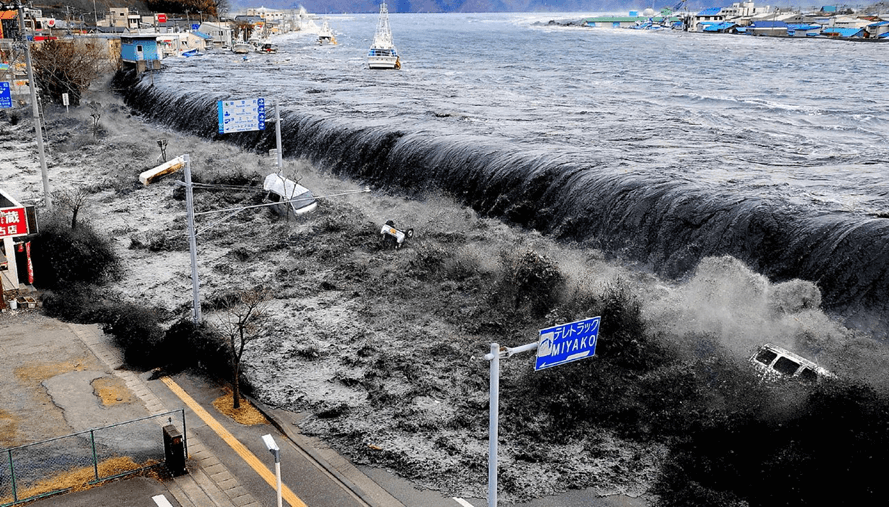
Tsunamis are extremely high waves. They occur when the seafloor is shaken by a major earthquake or volcano. These waves have nothing to do with tides and are not tidal waves. The name tsunami is a Japanese word for “harbor wave.” Waves of a tsunami may travel almost unnoticed in deep water away from an earthquake or volcanic eruption. They travel along the seabed as fast as a jet plane. They can travel over four hundred miles an hour. As they near shallow coastal waters, the water rears up into waves of one hundred feet or higher. These waves smash into harbors and coasts. They destroy boats and buildings as if they were toys. They drown most living things in their paths. The water may come in a series of a dozen or more waves. They can hit every few minutes.
Local quakes may generate a tsunami in as few as fifteen minutes. But if a quake occurred near Japan, the tsunami may hit across the Pacific Ocean hours later. The highest tsunami wave ever recorded was over 1,700 feet high. It struck the Alaskan coast in 1958. A powerful tsunami in 2004 hit coasts in Asia, killing more than 200,000 people. Be aware of tsunamis and know what to do in case one is forecast near you.
Source: Daily Warm-ups - Nonfiction Reading Grade 6
When was the highest tsunami wave recorded?
- 1956
- 1958
- 1960
- 1962
Which of the following is true according to the passage?
- Tsunamis are much more powerful than quakes.
- Tsunamis don't have any connection with tides.
- 400 miles per hour is the fastest speed of tsunamis.
- Only big and strong animals can survive tsunamis.
Which of the following is NOT mentioned in the passage about tsunamis?
- The meaning of their name
- Their movement characteristics
- The reason why they occur
- The times of year when they occur
According to the passage, what should you do when there is a forecast about a tsunami?
- Get into a boat and sail away as fast as possible.
- Get as far inland away from harbors and coasts as possible.
- Watch the tsunami from the balcony of your hotel room.
- Hide inside buildings and prepare food to live in basements.
Which of the following can be another title for the passage?
- “Tidal Waves Hit Japan”
- “Tsunamis Cause Some Damage”
- “Japan and Tsunamis”
- “Tsunamis and What to Know”
Build your vocabulary by learning these intensive phrases/idioms
Complete the second sentence so that it has a similar meaning to the first one, using the word in a bracket. You must use between THREE and FIVE words, including the word given. Do not change the word given.
In the evening, he likes to read books and articles that are irrelevant to his work. (NOTHING)
=> In the evening, he likes to read books and articles that his work.
Complete the second sentence so that it has the same meaning to the first.
Because of his popularity, the candidate is expected to win the election.
=> Riding on.......
My brother goes to see if _____, and we will sneak out of our bedroom.
- it takes two to tango
- it takes one to know one
- the coast is clear
- the devil is in the details
Choose the underlined part that needs correction.
Did you aware of the speed you were driving at, madam?
- Did
- of
- were driving
- madam