The telescope
12/6/2022 8:00:00 AM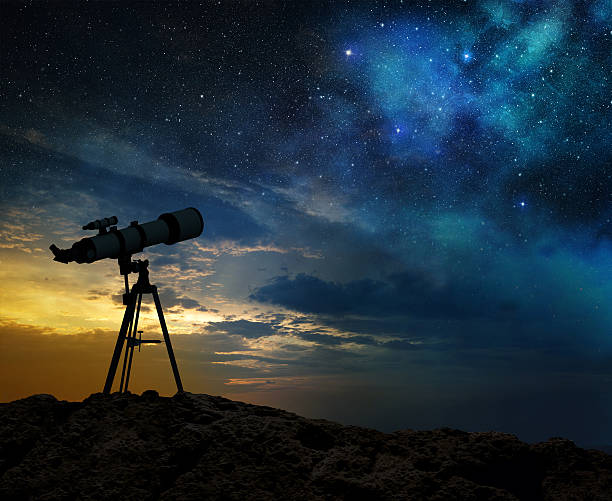
Do you know?
- A telescope is an important tool for astronomy that gathers light and directs it to a single point.
- Telescopes come in many sizes, from small handheld ones to large building-size hangars, and even football field structures whose dishes are built directly into the ground.
Let's explore more in the following passage!
Let's learn some new words before you read the passage:
Listen and complete the passage.
| magnified | relatively | scenic |
| refracting | reflecting | astronomers |
Since the beginning of time, man has been trying to look beyond what the human eye can see. Hans Lippershey, a man from the Netherlands, invented the telescope in 1608. The Dutch government tried to keep the invention a secret, but it didn't work out that way. Galileo heard about it and built his own, more powerful telescope in 1609. A telescope uses a magnifying lens to focus light coming from things at a great distance. Today, still use telescopes to look at distant stars, planets, and other wonders in space.
There are two main types of telescopes. The first type is called the telescope. This telescope helps you see things at a short distance. This type of telescope is used at tourist sights to help you see views. They were also used in the past by sea captains to help them find their way at sea. A refracting telescope has two lenses at either end of the tube. The largest lens is at the far end of the telescope. Light shines through to the smaller lens, which is called the eyepiece. The image is . The image in a simple refracting telescope is upside down.
The other type of telescope is the telescope. Reflecting telescopes use mirrors instead of lenses. The mirrors focus the light onto the eyepiece. The reflecting telescope is much more expensive. Some of the bigger reflecting telescopes are made using large mirrors. Oftentimes, they are set high up on mountains so that they will be above the clouds and can give people a clear view.
Read and answer the following questions.
The Telescope

Since the beginning of time, man has been trying to look beyond what the human eye can see. Hans Lippershey, a man from the Netherlands, invented the telescope in 1608. The Dutch government tried to keep the invention a secret, but it didn't work out that way. Galileo heard about it and built his own, more powerful telescope in 1609. A telescope uses a magnifying lens to focus light coming from things at a great distance. Today, astronomers still use telescopes to look at distant stars, planets, and other wonders in space.
There are two main types of telescopes. The first type is called the refracting telescope. This telescope helps you see things at a relatively short distance. This type of telescope is used at tourist sights to help you see scenic views. They were also used in the past by sea captains to help them find their way at sea. A refracting telescope has two lenses at either end of the tube. The largest lens is at the far end of the telescope. Light shines through to the smaller lens, which is called the eyepiece. The image is magnified. The image in a simple refracting telescope is upside down.
The other type of telescope is the reflecting telescope. Reflecting telescopes use mirrors instead of lenses. The mirrors focus the light onto the eyepiece. The reflecting telescope is much more expensive. Some of the bigger reflecting telescopes are made using large mirrors. Oftentimes, they are set high up on mountains so that they will be above the clouds and can give people a clear view.
Source: Daily Warm-ups Reading Grade 5
From reading the passage, what do you know?
- The magnifying lens used in telescopes is expensive.
- The price of a telescope depends on its size and its color.
- It took a long time for Galileo to develop his own telescope.
- People used the telescope during sea voyages in the past.
If you see an object through a refracting telescope, its image will _____.
- become more vivid
- be reduced in sharpness
- look bigger than it is
- become darker in color
What can be inferred from the passage?
- Hans Lippershey made a fortune with his invention of the telescope.
- In 1609, a Dutch man made history by inventing the telescope.
- The invention of the telescope has contributed greatly to space exploration.
- A refracting telescope is easier to use than a reflecting telescope.
What is NOT mentioned in the passage?
- where the first telescope was made
- how a refracting telescope is different from a reflecting one
- why Galileo built his own telescope
- which part of a refracting telescope allows light to shine through
The main purpose of this passage is to ____.
- describe the early telescopes that were used in ancient times
- inform the reader about how the telescope works
- prove Galileo's contribution to the invention of the telescope
- compare the two main types of telescopes
Build your vocabulary by learning these intensive phrases/idioms
She’s a singer with the talent and determination to _____.
- bury the hatchet
- go the distance
- spy out the land
- fly off the handle
Complete the second sentence so that it has a similar meaning to the first one, using the word in a bracket. You must use between THREE and FIVE words, including the word given. Do not change the word given.
At eighteen, she left home to enjoy the hustle and bustle of the city life of London. (LIGHTS)
=> When she was eighteen, she moved out of her house for of London.
Let's hope this new job _____ well for him.
- works out
- goes off
- makes up
- puts down
Rearrange the words in a correct order to make a complete sentence (kéo từng từ/cụm từ về vị trí đúng để tạo thành câu hoàn chỉnh).