Krakatoa
10/26/2022 9:01:12 AM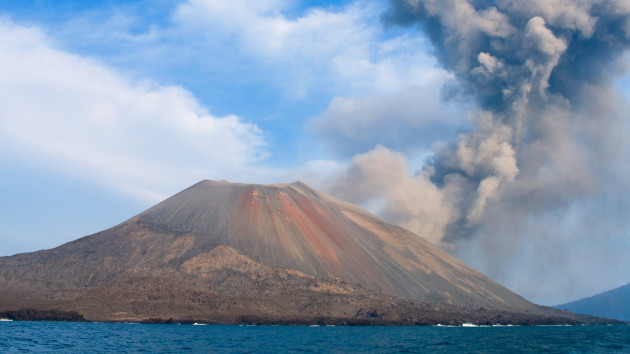
Do you know?
- The eruption of Krakatoa, or Krakatau, in August 1883 was one of the most deadly volcanic eruptions of modern history.
- When the volcano erupted, the explosion fired up hot ash 50 miles into the air. The force was about 13,000 times more powerful than the bomb that devastated Hiroshima in 1945.
Let's explore more in the following passage!
Let's learn some new words before you read the passage:
Listen and complete the passage.
| blast | collapsed | exploded |
| tremendous | roar | uninhabited |
One of the most powerful volcanic explosions in human history occurred in 1883. It happened on the island of Krakatoa near Java. This is in Indonesia. On August 27, after half a million years of inactivity, Krakatoa awoke with a . Three volcanic mountains on the island . The massive sent a cloud of ash, dust, steam, and volcanic debris fifty miles high into the atmosphere.
More explosions and violent earthquakes occurred. The explosive force created winds that circled the globe seven times. But the worst was yet to come. The explosion caused giant waves called tsunamis. They roared across the water and blasted the shores of nearby islands. Just one of these waves killed 10,000 people on a neighboring island thirty miles away. At least 36,000 people were killed altogether.
Ships that were far from shore were safe from these waves. But near the coast, the waves picked up boats and threw them onto the land. Waves from the volcanic eruption and earthquake were felt as far away as the English Channel. Tsunamis were recorded in South America, too.
A noise occurred when three-quarters of the island into the sea. It was an island about the size of New York's Manhattan Island. The sound was so loud that people heard it 3,000 miles away. The people in Texas who heard the explosion thought it was gunfire. They were shocked to learn that it came from half a world away.
Read and answer the following questions.
Krakatoa
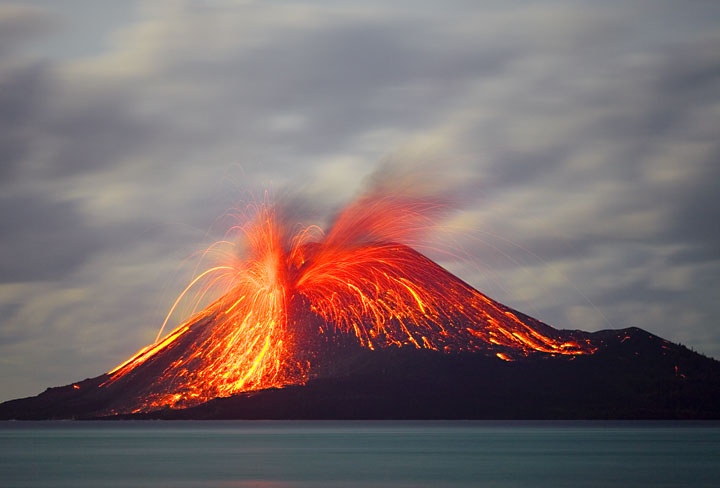
One of the most powerful volcanic explosions in human history occurred in 1883. It happened on the island of Krakatoa near Java. This is in Indonesia. On August 27, after half a million years of inactivity, Krakatoa awoke with a roar. Three volcanic mountains on the uninhabited island exploded. The massive blast sent a cloud of ash, dust, steam, and volcanic debris fifty miles high into the atmosphere.
More explosions and violent earthquakes occurred. The explosive force created winds that circled the globe seven times. But the worst was yet to come. The explosion caused giant waves called tsunamis. They roared across the water and blasted the shores of nearby islands. Just one of these waves killed 10,000 people on a neighboring island thirty miles away. At least 36,000 people were killed altogether.
Ships that were far from shore were safe from these waves. But near the coast, the waves picked up boats and threw them onto the land. Waves from the volcanic eruption and earthquake were felt as far away as the English Channel. Tsunamis were recorded in South America, too.
A tremendous noise occurred when three-quarters of the island collapsed into the sea. It was an island about the size of New York's Manhattan Island. The sound was so loud that people heard it 3,000 miles away. The people in Texas who heard the explosion thought it was gunfire. They were shocked to learn that it came from half a world away.
Source: Daily Warm-ups- Nonfiction Reading Grade 6
Before its explosion in 1883, how long was Krakatoa inactive?
- 500 years
- 5000 years
- 50000 years
- 500000 years
What do you NOT know from the passage?
- The tsunamis caused by the Krakatoa explosion killed more than 30,000 people.
- Krakatoa island was roughly the size of New York's Manhattan Island.
- The English Channel was also seriously affected by the Krakatoa explosion.
- No one lived on the island of Krakatoa during the 1883 volcanic explosion.
The word "violent" in paragraph 2 is CLOSEST in meaning to _____.
- intense
- aggressive
- brutal
- extensive
What can you conclude from the passage?
- Of all the volcanic explosions, the Krakatoa event caused the most catastrophic damage.
- The farther ships were from shore, the safer they were from tsunamis.
- Even people in Texas could feel aftershocks of earthquakes caused by the Krakatoa explosion.
- The year 1883 saw the highest number of deaths from natural disasters.
What is the best summary of the entire passage?
- A powerful earthquake occurred on Krakatoa, putting many lives and homes at risk.
- Waves of sound could be heard thousands of miles away.
- A sequence of natural disasters destroyed an island and caused severe damage.
- Tsunamis are giant waves that cause a lot of damage.
Build your vocabulary by learning these intensive phrases/idioms
- steam
- cloud
- tension
- sweat
Our volunteer task is to _____ all the trash around this neighborhood.
- pick on
- go for
- throw away
- pick up
Choose the word(s) CLOSEST in meaning to the underlined word(s).
My fiancé and I are between the devil and the deep blue sea because both our parents want us to spend Thanksgiving with them but they live on opposite sides of the country.
- between the sun and the moon
- between a rock and a hard place
- between the left and the right
- between a lime and a pepper
Complete the second sentence so that it has a similar meaning to the first one, using the word in a bracket. You must use between THREE and FIVE words, including the word given. Do not change the word given.
I told a joke to try to break the ice, but no one was in the mood for laughing. (HEAVY)
=> I tried to break with a joke, but it didn't work.