[IELTS 5.] Unit 15.1 - Reading & Listening
1/28/2021 5:00:00 PMYou will hear a list of ingredients. Choose the correct quantity and then write a different way to express the same quantity. Only write ONE WORD AND/OR A NUMBER in each blank.
1. apples: =
2. sugar: =
3. flour: =
4. butter: =
5. milk: =
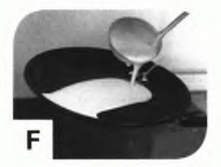
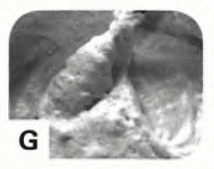
Listen to the recording and put the photos in the correct order.
|
|
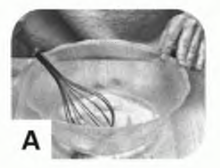
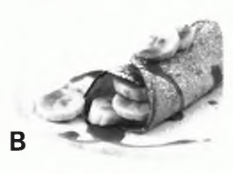
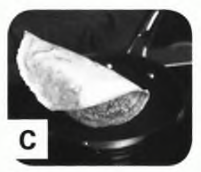

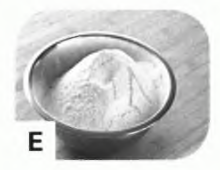
1 -
2 -
3 -
4 -
5 -
6 -
7 -
You will hear a group of students talking about a project they are planning to present. Listen and choose the correct answer.
- the subject
- the topic
- course
- Edward
- Farouk
- Mandy
- Michelangelo and Botticelli.
- Michelangelo.
- Michelangelo and Leonardo da Vinci.
- everyone else will choose him.
- his style of painting is different.
- he's a great artist.
You will hear the students planning the slides they are going to prepare for their group presentation. Complete the notes below. Write NO MORE THAN TWO WORDS OR A NUMBER for each answer.
Title: Michelangelo and Botticelli:
Total no. of slides:
Intro
2 slides each Michelangelo and Botticelli
2 slides: How Michelangelo and Botticelli are and how they are
Conclusion
Listen to the four students discussing their presentation and choose the TWO correct answers.
What do the students have to decide?
- whether or not to put the slides about Botticelli before Michelangelo
- which artist is the most famous
- which artist Beth will talk about
- where to put Farouk's slides
- whether to talk about Michelangelo first
The topic of the presentation is _____
- how mobile phones are designed.
- the risks caused by mobile phones.
- how mobile phones are used.
The introduction explains the _____
- dangers of mobile phones.
- importance of mobile phones.
- importance of understanding the dangers of mobile phones.
On the second slide, the students are planning to _____
- explain why mobile phones are dangerous.
- point out some different kinds of risks.
- mention ways to avoid the risks.
The tutor suggests _____
- not discussing the dangers of mobile phones.
- discussing the benefits of mobile phones.
- having an argument.
Listen to the next part of the recording and complete the slides. Write ONE WORD ONLY.
Slide 1
Introduction
Silde 2
- Health
- Security
Slide 3
for avoiding dangers
Listen to the last part of the recording and complete the sentences. Write NO MORE THAN TWO WORDS OR A NUMBER.
1. The actual talk will last for .
2. Each student will speak for .
3. The slides must all have the .
Listen to the recording and fill in the gaps.
Mr West: However, we voluntary redundancy and early retirement and to cover most of the jobs this way.
Reviewer: And what has led to this situation? a result of Angleside's poor performance over the past five years?
Mr West: No, the company badly. This nothing to do with the figures. It just makes good business sense.
Reviewer: So that your figures the basis for this decision to cut jobs?
Mr West: Absolutely. We the way we operate our business two years ago.
Here is the journalist's radio report. Listen to the recording and fill in the gaps with the verbs in the box.
At local company Angleside, up to 150 employees will lose their jobs. Christopher West, the Managing Director, they would be offering voluntary redundancy and early retirement and to cover the job losses in this way. I Mr West if these cuts were a result of Angleside's poor performance over the past five years but he that the company had not been doing well and that the job losses have nothing to do with the figures. West that they decided to make changes two years ago. He me that the company would continue to operate in the future and to do his best for the employees.
Read the passage.
Part one: The beach, a natural treasure trove
Nature walks can be fun, energizing and educational at the same time. In Part One, we will look at what we can find on a marine walk. In Part Two, we will discuss our fascinating forests.
First of all, when you are walking on the beach you may be able to spot tracks. Birds and crabs leave footprints behind, especially in wet sand. On sandy beaches you will also be able to find interesting holes, made by crabs that were digging for food in the mud.
You may also come across jellyfish, as these are often washed up on the beach by the tides. They have no eyes, ears, heart or head and are mostly made of water. They look like a bag with arms, which are called tentacles. These contain poison, which helps them catch food. Even when they are out of the water or in pieces the tentacles may sting you, so they are best left alone.
Other animals you may find are coral and barnacles. The latter are marine animals that are related to crabs and lobsters and live in shallow waters. They like to attach themselves to hard materials, so you are likely to find them stuck to a piece of wood.
You may also see what look like small gelatinous blobs but are actually fish or worm eggs.
If you are lucky, you may find a fossil. In essence, this is an animal that died and got buried in a sea bed. They are likely to look like a piece of rock with an imprint of an animal skeleton. Their history is very interesting.
For an animal to become fossilized, it has to be buried in mud, sand or soil. If an animal dies but is not buried, it is more likely to rot away, be swept away by wind or water, and/or be eaten by another animal. Over millions of years, the animal remains become buried deeper and deeper; the mud, and or soil compresses and slowly becomes rock. Their bone or shell starts to crystallize, because of surrounding minerals and chemicals. Ideally, the temperature stays relatively constant throughout this process. Sometimes the fossil dissolves completely and just leaves an imprint. At other times, waves, tides and currents slowly make the rocks erode, which allows the animal remains to break off, ready for you to find.
What you will definitely find a beach are shells. These were once the homes of animals such as snails, barnacles and mussels, consisting of a hard layer that the animal created for protection as part of its body. After the animal has died, its soft parts have rotted or have been eaten by other animals, such as crabs. What is left is a beautiful seashell for you to admire and take home if you wish.
Using NO MORE THAN FOUR WORDS from the passage, complete each gap in the diagram.
a. 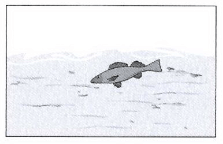
A dead fish is covered in mud, .
b. 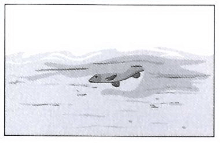
The fish goes into the soil.
c. 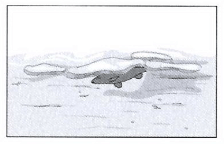
The soil takes years to turn into .
d. 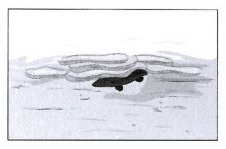
Minerals cause the fish to .
e. 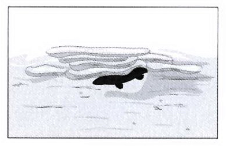
This happens over millions of years.
f. 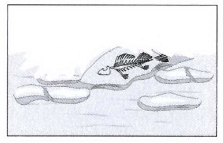
Rock erosion is caused by waves .
g. 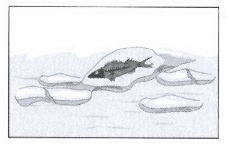
Fossil may .
Read the passage.
The many uses of the Moringa tree
The Moringa tree, Saragwa, or Drumstick tree, is relatively unknown in the West, despite the fact that it is incredibly useful. Miriam Tayne reports about its culinary, medicinal and other uses.
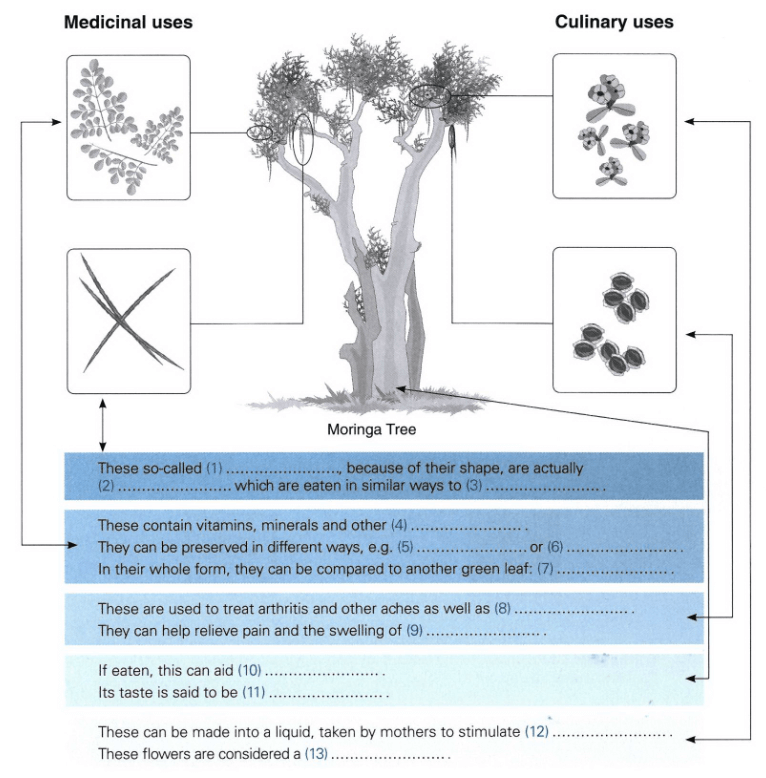
The Moringa tree is a relatively small tree that typically grows to between three and ten metres tall. Its flowers are creamy-coloured and have been compared to small orchids. The plant has long and round green pods that can grow to 30 cms and which look a bit like drumsticks, hence the tree's common name. The pods consist of three parts, which contain round, dark brown seeds. Planting needs to be done in sandy or muddy soil, using these seeds or tree cuttings. The plant does not tolerate frost but thrives in hot climates. It is very common in South and South-east Asia, Africa and America.
The leaves are reputed to have anti-inflammatory and ant-bacterial properties, so are used for eye and ear infections, fevers, etc. They are also held against the forehead to reduce headaches, or made into tea to treat stomach complaints. As they contain a lot of iron they have been used for the treatment of anaemia, a medical condition in which there are too few red cells in the blood, causing tiredness. The plant also contains many nutrients, such as phosphorus, calcium, potassium, and vitamins A and C.
The ground-up seeds are commonly used to treat certain skin infections, but can be used for much more. Ground seeds can be mixed with salt or oils to apply to the body to treat cramp, back ache and forms of arthritis, a medical condition in which the joints are swollen and painful. The oil, called Ben oil because it contains behenic acid, is also used as a hair treatment or a perfume, and to deter mosquitoes and treat their bites. The by-products of the manufacturing process are used for fertilization and water purification.
The roots work in exactly the same way as the seeds, but are much stronger, so are not used as often. They have additional uses for heart and circulation problems, whereas the gum is sometimes used to treat asthma. The bark has quite a pleasant taste end is sometimes eaten to encourage digestion.
The plant's main use is as food: for livestock, and for human beings, because it contains: high concentrations of fibre and protein. The drumsticks are eaten in soup and/or as green beans, often in combination with shrimp, whereas the seeds are eaten like peas, or roasted. The leaves are eaten fresh or cooked in similar ways to spinach. Chopped, they are used as a garnish on soups and salads. They are often pickled or dried so that they are always available to use in sauces, stir-fries, soups and in sweet and sour or spicy curries.
Like every other part of the tree, its flowers are not just decorative but also functional. They taste a bit like wild mushrooms and are considered a delicacy. They are used to make tea treat the common cold, mixed with honey to make cough medicine, and made into juice to be drunk during breastfeeding as it is said to increase milk flow.
There is not a part of the tree that is not used. The Moringa tree is probably the most beneficial tree in the world.
Use NO MORE THAN TWO WORDS from the passage, complete each gap in the diagram.
1.
2.
3.
4.
5.
6.
7.
8.
9.
10.
11.
12.
13.