Đề số 8 ôn thi vào 6 môn Tiếng Anh trường THCS Nam Từ Liêm
9/20/2026 7:00:00 AMHow is the girl going to travel to her uncle's house?



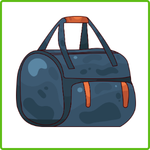
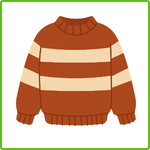
Which present has the boy bought his brother?

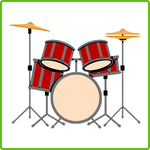
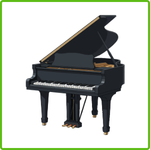
What music will they have at the barbecue?

What is the girl going to have for dessert?
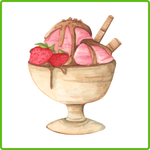
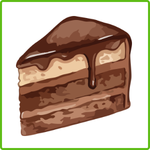

What will the girl do this evening?


You will hear a teenager asking for information about a sports shirt.
For each question, write the correct answer in the gap. Write NO MORE THAN THREE WORDS AND/OR NUMBERS.
FastPace Sports Equipment
Order Form
0. Item: tennis shirt
1. Colour:
2. Size:
3. Price: £
4. Date of order: of March
5. Send to:
You will hear Mei talking to her friend Haruto about an art exhibition.
For each question, choose the correct answer.
- Her family
- Her friends from school
- Her neighbors
- Wet
- Sunny
- Cloudy
- The paintings
- The photographs
- The videos
Mei didn't want to go to the art exhibition because _____.
- she doesn't like modern art
- she thought it might be boring
- she had to study
- To a festival
- To a concert
- To a competition
Choose the word which has the underlined part pronounced differently from the others.
painted
locked
decided
invited
Choose the word which has the underlined part pronounced differently from the others.
center
cinema
capital
city
Choose the word whose underlined part is pronounced differently from the others.
- number
future
- summer
- product
arrive
repair
announce
narrow
- physicist
wonderful
together
restaurant
Nisa: “Do you mind if I borrow your umbrella for a while?”
Jira: “_____”
- No, here you are.
- Never mind.
- You’re welcome.
- Yes, and bring it back.
Mai: "Thank you very much for helping me with my maths homework."
Minh: "_____"
You don’t mention it.
No mention of it.
You mention it.
Don’t mention it.
Complete the sentence by changing the form of the word in capitals.
Tourists are really impressed by the of Vietnamese people. (FRIENDLY)
Complete the sentence by changing the form of the word in capitals.
Learning Latin can our knowledge of international languages. (RICH)
Complete the sentence by changing the form of the word in capitals.
We think that Mother’s Day should be celebrated . (NATION)
_____ bought you this helicopter model? - My father did.
What
When
Where
Who
My teacher often gives us advice _____ water.
- by how saving
- about how saving
- on how to save
- with how to save
She joined the local tennis club _____ members were at least 60.
- who
- which
- that
- whose
Would you mind telling me what you were doing _____ the afternoon of Friday the 13th of March?
- on
- in
- at
- from
Lorene: “I don’t like watching thrillers late at night.”
Tom: “_____.”
- So do I
I don’t, either
- I, too
- Either do I
Read the text and choose a correct answer to fill in the blank.
CARTOON FILMS
Cartoon films have very few limits. If you can draw something, you can it move on the cinema screen. The use new ideas and advanced computer programs means that cartoons are becoming exciting again for people of all ages.
By the end of the 1970s, the cinema world had decided that cartoons were only for children. But soon afterward, one or two directors had some original new ideas. They proved that it was possible to make films in which both adults and children could the fun.
However, not cartoon film was successful. The Black Cauldron, for example, failed, mainly it was too frightening for children and too childish for adults. Directors learnt from this mistake, and the film companies began to make large amounts of money again.
Choose the underlined part that needs correction.
People often are afraid of things that happen unexpectedly.
- often are
- of
- that
- unexpectedly
Choose the underlined part that needs correction.
We check our answers twice in order to not make mistakes on the test.
- check
- twice
- to not
- make
Choose the underlined part that needs correction.
This film is not suitable with children because it's too violent.
- is
- with
- because
- too
Read the passage and choose the correct answer to each question.
Many people now think that teachers give pupils too much homework. They say that it is unnecessary for children to work at home in their free time. Moreover, they argue that most teachers do not properly plan the homework task they give to pupils. The result is that pupils have to repeat tasks which they have already done at school.
Recently in Greece many parents complained about the difficult homework which teachers gave to their children. The parents said that most of the homework was a waste of time, and they wanted to stop it. Spain and Turkey are two countries which stopped homework recently. In Denmark, Germany and several other countries in Europe, teachers cannot set homework at weekends. In Holland, teachers allow pupils to stay at school to do their homework. The children are free to help one another. Similar arrangements also exist in some British schools.
Most people agree that homework is unfair. A pupil who can do his homework in a quiet and comfortable room is in a much better position than a pupil who does his homework in a small, noisy room with the television on. Some parents help their children with their homework. Other parents take no interest at all in the children's homework.
It is important, however, that teachers talk to parents about homework. A teacher should suggest suitable tasks for parents to do with their children. Parents are often better at teaching their own children.
According to the writer, many parents would like their children _____.
to do homework at school only
to have less homework
to do more difficult homework
to do homework both at school and at home
According to many people, _____.
children are too lazy to do their homework
teachers do not set enough homework
children shouldn’t be given marks for homework
a lot of homework has not been planned properly
Greek parents thought _____.
their children’s homework was too easy
their children’s homework was useful
- their children’s homework was useless
more time should be allowed for homework
In some countries in Europe, _____.
- teachers cannot have their pupils do their homework at weekends
few people think homework should be given to children only at weekends
- teachers are allowed to give homework to children only at weekends
- most people agree that it is fair to have children do their homework at home
Which statement is NOT true?
In some schools in Britain, children can do their homework at school and help one another.
Only a small number of people think homework is fair.
Teachers should advise parents about how to work together with their children at home.
- All parents show great interest in their children’s homework.
Rearrange the words in a correct order to make a complete sentence (kéo từng từ/cụm từ về vị trí đúng để tạo thành câu hoàn chỉnh).
Rearrange the words in a correct order to make a complete sentence (kéo từng từ/cụm từ về vị trí đúng để tạo thành câu hoàn chỉnh).
Rearrange the words in a correct order to make a complete sentence (kéo từng từ/cụm từ về vị trí đúng để tạo thành câu hoàn chỉnh).
Complete the second sentence so that it has the same meaning to the first.
In spite of her injured feet, she managed to get home before dark.
=> Although ...........
Complete the second sentence so that it has the same meaning to the first.
She finds it easy to take part in group discussions.
=> She has ..........
Make a complete sentence using the given words. Change the form of the words or add other words if necessary.
It / be / necessary / for you / do / morning exercise / every day.
Make a complete sentence using the given words. Change the form of the words or add other words if necessary.
Hung / wish / he / be / old enough / ride / motorbike.