Unit 4 - Lesson 1
3/1/2024 1:00:00 PM

KIẾN THỨC NGÔN NGỮ
Hãy cùng làm các bài tập về từ vựng và ngữ pháp thuộc Lesson 1 - Unit 4 ngay nhé!
Look at the crossword and the given clues to guess the words related to natural disasters and complete the sentences.

Down
Number 1: When skiing, always be aware of risks and follow safety guidelines.
Number 6: The government warned people living on the hill about the risk of a(n) .
Across
Number 2: The has caused water shortages, affecting both farming and everyday activities.
Number 3: Yesterday, a big hit our town, covering everything in a thick blanket of snow.
Number 4: During the , the dishes fell off the shelves and broke.
Number 5: Heavy rain caused a(n) , so the school was closed for two days.
Complete the word with (6) missing letters. The first and last letters have been given.
Many volunteers came to help the community after the dr.
Complete the word with (5) missing letters. The first and last letters have been given.
According to the news, a ti hit the island with huge waves.
Local authorities advise everyone to stay indoors during the intense _____.
- solar panel
- tidal wave
- escape plan
- heat wave
_____ season in the region usually brings heavy rains and strong winds.
- Tsunami
- Drought
- Typhoon
- Wildfire
_____ can you find the most active volcanoes in the world?
- Where
- Why
- How many
- What
_____ rainfall can trigger a landslide?
- How wide
- How tall
- How many
- How much
_____ should we start storing food and water for a natural disaster?
Who
Which
When
What
_____ was the area affected by the earthquake last year?
How often
How wide
When
Which
Choose the underlined part that needs correction.
When is the most common natural disaster in your country?
- When
- the most
- natural disaster
- in
Choose the underlined part that needs correction.
How tall does a typical typhoon season last in your region?
- How tall
- typical
- last
- in


KỸ NĂNG NGÔN NGỮ
Hãy cùng làm các bài tập đọc hiểu, hỏi đáp trong hội thoại thuộc Lesson 1 - Unit 4 ngay nhé!
Read the text and answer the following questions.
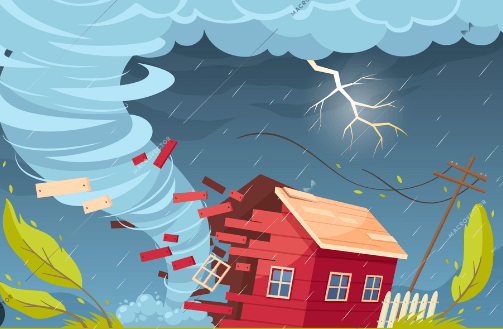
Big events can sometimes cause a lot of problems and affect many people. We call these events "natural disasters". One type of disaster is an avalanche. This happens when a lot of snow and ice slides down from a mountain. Landslides are similar - rocks and dirt fall down a slope, often because of heavy rain or earthquakes. Avalanches and landslides can damage houses and block roads, making it difficult to get around. Floods are another kind of natural disaster. They happen when rivers or lakes overflow their banks and water covers the land. Droughts are the opposite of floods. They happen when there is no rain for a long time, and there is not enough water for plants to grow. Floods and droughts can damage houses, crops, and roads. There are many other natural disasters, like earthquakes, tsunamis, wildfires, blizzards, and typhoons. These events can cause serious problems for people and the environment. However, we can stay safe in these emergencies if we understand safety guidelines.
Write the short answer to this question. Write NO MORE THAN THREE words.
What type of disaster can occur when a lot of snow and rocks slide down from a mountain?
=>
Write the short answer to this question. Write NO MORE THAN THREE words.
Besides earthquakes, what causes landslides?
=>
Write the short answer to this question. Write NO MORE THAN THREE words.
Which natural disaster makes an area very dry for a long time?
=>
Write the short answer to this question. Write NO MORE THAN THREE words.
What kinds of disasters can destroy crops and facilities?
=>
Write the short answer to this question. Write NO MORE THAN THREE words.
What should people know to stay safe during emergencies?
=>
Choose the best way to rearrange the following sentences in order to make a meaningful conversation.
a. Oh dear, what should we do?
b. We should immediately take our supplies and move to higher ground.
c. Next is to inform our neighbors about the warning and ensure everyone is safe.
d. I just received a flood warning for our area.
e. Right, what's next?
- a-b-e-c-d
- d-a-b-e-c
- d-a-c-e-b
- a-c-d-e-b
Choose the best way to rearrange the following sentences in order to make a meaningful conversation.
a. Exactly! Do you know that earthquakes can potentially lead to tsunamis?
b. Have you heard about earthquakes or tsunamis?
c. Oh, I didn't know that two disasters were related like that.
d. Yes, I've heard of them. Earthquakes are when the ground shakes and tsunamis are huge ocean waves, right?
- c-d-b-a
- b-c-a-d
- b-d-c-a
- b-d-a-c