Unit 4 - Lesson 3
3/1/2024 2:00:00 PM

KIẾN THỨC NGÔN NGỮ
Hãy cùng làm các bài tập về từ vựng thuộc Lesson 3 - Unit 4 ngay nhé!
Read the announcement. Choose the correct word from the box to fill in each blank.
| immediately | inform | solution | expect | effectively | warning |
Attention all residents!
We've received a about an upcoming tsunami. We it to hit our coastal area soon. Please your family and friends . Make sure you have all the necessary supplies and move to higher ground.
Stay safe and follow official updates.


KỸ NĂNG NGÔN NGỮ
Hãy cùng làm các bài tập đọc hiểu, hỏi đáp trong hội thoại và viết đoạn văn thuộc Lesson 3 - Unit 4 ngay nhé!
Read the following passage and choose the correct answer to each of the questions.
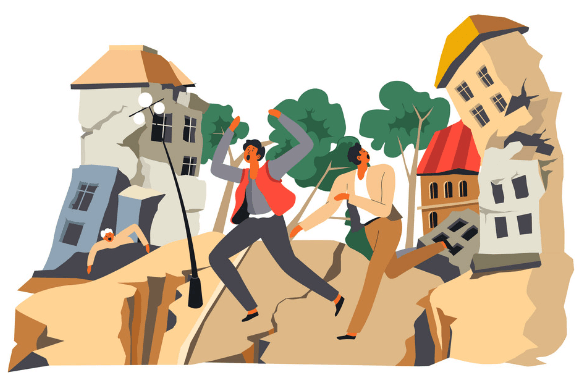
Disasters are unexpected events that can cause a lot of harm and danger. They can happen suddenly, and often, we do not expect them. These events can be natural, like floods and earthquakes, or caused by humans, such as factory explosions. When there is a chance of a disaster, experts work hard to inform the public. They send out warnings through TV, radio, and the internet. A warning is an important message that tells people a disaster might happen soon. It helps everyone prepare and stay safe.
When you receive a warning, you should act immediately. This means doing things right away, like evacuating or seeking shelter if necessary. Being quick can help avoid injuries and save lives.
It's also good to have a plan before any disasters happen. This plan should include where to go, what to take, and how to stay in touch with family and friends. Remember, keeping updated with information and reacting immediately to warnings can significantly enhance your safety and minimize harm during a disaster.
According to the passage, which of the following is true?
- Most disasters can be predicted thanks to modern technology.
- There is only one type of disaster, which is caused by nature.
- Old televisions can't warn us about upcoming natural disasters.
- We often do not expect disasters because of their harms.
The author mentions "factory explosions" in the first paragraph as _____.
- a consequence of natural disasters
- a disaster that can be prevented by TV warnings
- a type of disaster that is caused by humans
- a disaster that is more severe than floods and earthquakes
The word "evacuating" is CLOSEST in meaning to _____.
- leaving
- sailing
- donating
- supporting
According to the passage, an evacuation plan should include the following elements EXCEPT _____.
- Where to go
- When to leave
- What to take
- How to stay in touch with family
In the last paragraph, what does the writer advise us to do to protect ourselves during a disaster?
- Stocking up supplies and staying indoors
- Keeping children safe and reacting immediately
- Informing neighbors and evacuating together
- Staying informed and responding quickly
Choose the best way to rearrange the following sentences in order to make a meaningful conversation.
a. Well, we can start by donating basic supplies like clothes, food, and clean water. We could also volunteer for the clean-up work in River Town this weekend.
b. Yes, I saw it on the news. It's so terrible. Do you know what exactly caused the flood?
c. That sounds dangerous. What problems did the flood cause?
d. Did you hear about the big flood in River Town last Thursday?
e. It was because of the heavy rain that didn't stop for almost a week.
f. Oh no, that's awful. What can we do to help those affected?
g. It caused power cuts and water shortages, so activities became inconvenient.
- d-b-e-f-a-g-c
- d-b-e-c-g-f-a
- d-b-a-c-g-f-e
- d-b-e-f-a-c-g
Choose the correct answer in the box to complete the conversation. Write only the letter A-D in each blank.
Lisa: Do you know which natural disasters are related to snow?
Tom: Well, there is a heavy kind of snowstorm called a blizzard.
Lisa: Blizzard? . I've heard about it on the radio. What else?
Tom: Another kind is an avalanche. It happens when snow, ice, and rocks slide down from a mountain.
Lisa: Oh dear, it sounds scary.
Tom: In the case of a blizzard, we should stay indoors and try to stay warm.
Lisa: Your knowledge of natural disasters is really impressive, Tom.
Write an emergency announcement (80-100 words) to warn an area about a disaster.
Your announcement should include:
- the emergency type, who is sending the announcement
- where and when it happens
- the cause and main dangers
- what people should do