Unit 7 - Năng lực giao tiếp: Today's Media
3/2/2024 4:00:00 PMListen to an audio and complete the summary below. Write ONE or TWO words as you hear in each gap.
How to Find Reliable Information in Today's Media
Tip 1: Question the Source
- Ensure information is from a well-known, credible source.
- Check the 's expertise.
Tip 2: Go Beyond the Headline
- Read the entire article to understand the .
Tip 3: Fact-Check Information
- Verify the truth by reading multiple sources, especially for news.
Tip 4: Diversify Media
- Don't rely on just one source.
- Use different types of media to avoid bias.
Tip 5: Be a Critical Thinker
- Don't accept information blindly.
- Question, research, and consider .
Complete the passage with the words given.
Visual and Audio Media
Television and radio are two important forms of the media. Television combines and audio elements, making it very effective for advertisements and . Businesses often use TV ads to reach many people and sometimes offer to attract more customers. Radio, on the other hand, relies only on audio. It is great for people who are working or driving to listen to news, music, and other programs.
Both television and radio for a large part of our daily media consumption. They are credible sources of information and often work alongside the to deliver news. However, with the rise of digital billboards and online platforms, the way we consume media is changing. Digital billboards are becoming more common, providing visual advertisements in public places.
Despite these changes, television and radio remain popular because they are and trustworthy. They continue to play a key role in our lives, offering entertainment and keeping us informed.
Paul: "Hi Ben! _____"
Ben: "It's been pretty good, thanks! I just finished a big project at work, so I'm feeling relieved."
- What's the matter with you?
- How has your day been?
- How old are you?
- Where have you gone?
Jane: "_____ It's perfect for a picnic."
James: "Absolutely! I wish we had more company though."
- It's a lovely day, isn't it?
- Is it awful today?
- Do you really care?
- Do you really mind?
Tommy: "_____ Where did you get them?"
Lance: "Thanks! I got a pair of them online from a new brand I discovered recently. It's really comfortable for walking and running."
- I like your new shoes!
- I told you!
- These shoes look terrible.
- Are you sure?
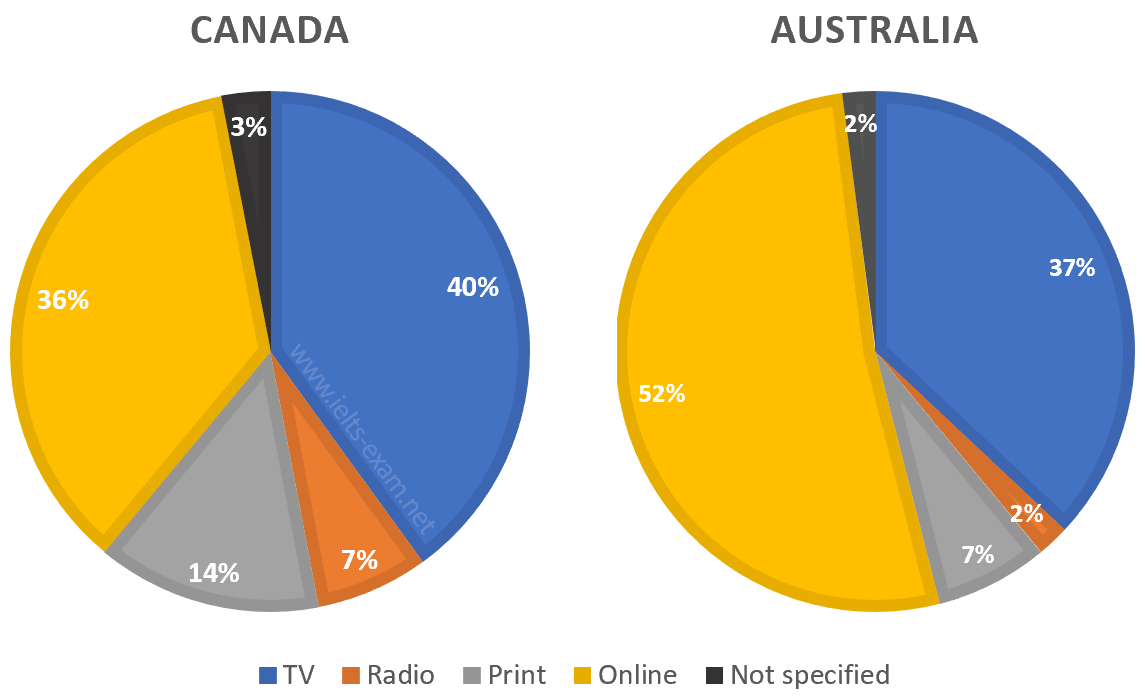
The pie charts compare ways of accessing the news in Canada and Australia. Write a paragraph (around 150 words) to summarise the information by selecting and reporting the main features, and make comparisons where relevant.