Đề số 7 ôn thi môn Anh vào lớp 6 trường Hà Nội - Amsterdam
10/23/2020 1:55:00 PMWhat will they do at the weekend?
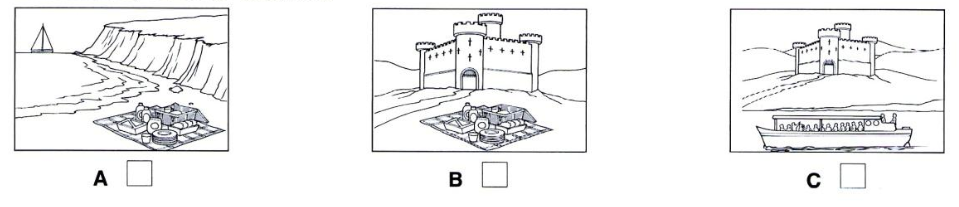
- A
- B
- C
Which is the man's mother?
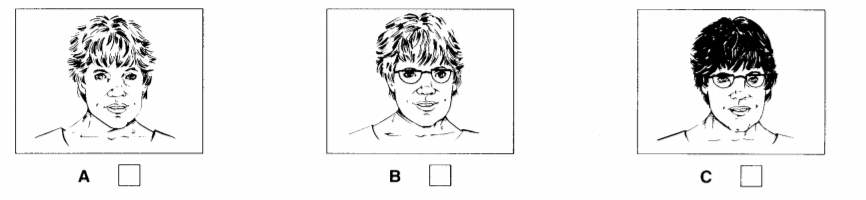
- A
- B
- C
What will the boy need to buy for his holiday?
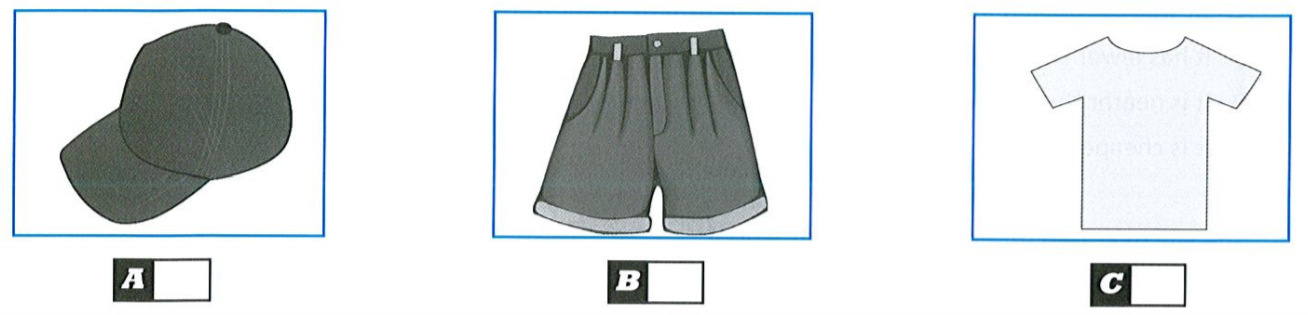
- A
- B
- C
How did the man get home?
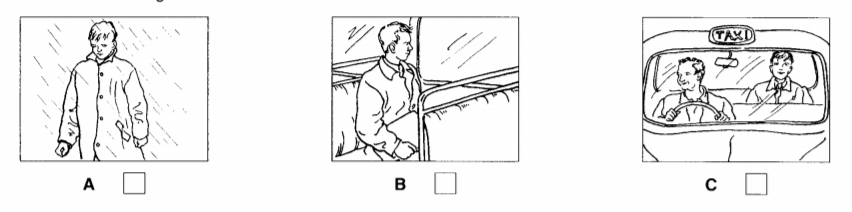
- A
- B
- C
Which train will the woman catch?

- A
- B
- C
You will hear part of a talk by a woman called Jessica, about changes in the way we communicate.
For each question, write the correct answer in the gap. Write one or two words or a number or a date or a time. You can listen to the audio twice.
Changing communication - A talk by Jessica Fry
Topic:
How communication has changed in the last years.
The past:
We used to wait for replies to letters and cards.
Young people communicated by writing or phoning friends from home.
People used pay phones instead of mobiles.
The present:
We can contact other people very .
Mobile phones help us stay in touch when away from home.
The disadvantages:
Apart from words, we communicate through
- the way we say something
- facial expressions
- our
Choose the word which has the underlined part pronounced differently from the others.
table
climb
cube
- crab
Choose the word which has the underlined part pronounced differently from the others.
- believed
- impressed
- enjoyed
- consumed
Choose the word that differs from the rest in the position of the main stress.
- relax
- wonder
- problem
- planet
Choose the word that differs from the rest in the position of the main stress.
- medicine
- endanger
- addition
- survival
- bring
- take
- cut
- put
I hope the children will get used _____ in a small house.
- live
- to live
- living
- to living
We were _____ to find the temple still in its original condition after the earthquake.
- frustrated
- reluctant
- astonished
- furious
They as well as Mai _____ to New York tomorrow. They bought the tickets yesterday.
- is flying
- are flying
- fly
- flies
Some scientists spend all their lives _____ researches on a specific subject and became successful, but some didn't.
- making
- having
- doing
- getting
Jack: "Do you think eating more fruits and vegetables is good for our health?"
Emma: "_____"
- You are welcome.
- Never mind.
- Thanks a lot.
- Without a doubt.
Jane: What an attractive hairstyle you have got, Mary!
Mary: _____
- Thank you very much. I am afraid.
You are telling a lie.
Thank you for your compliment.
I don't like your sayings.
Choose the word(s) CLOSEST in meaning to the underlined word(s).
We really appreciate your help, without which we couldn’t have got our task done in time.
- depreciate
- feel proud of
- feel thankful for
- require
Choose the word(s) CLOSEST in meaning to the underlined word(s).
I bought this laptop on my father's recommendation.
- advice
- information
- fiction
- interest
Choose the word(s) OPPOSITE in meaning to the underlined word(s).
I think we cannot purchase this device this time as it costs an arm and a leg.
- is cheap
- is painful
- is confusing
- is expensive
Choose the word(s) OPPOSITE in meaning to the underlined word(s).
The village was charming and attracted visitors from near and far.
- fascinating
- tranquil
- peaceful
- boring
Read the text and choose the best answer to fill in the blanks.
Sugar gliders
How would you like a sugar glider as a pet? As well as their cute brown eyes and grey fur, these 20-centimetre-long animals from Australia have an unusual skill - they can fly. Sugar gliders have a part of skin on their backs, which unfolds into a square a kite or a handkerchief. This makes them to "fly" between branches as they search for food.
But whether a sugar glider might seem like a great pet, they need a lot of care and . To keep one at home you'll have to provide a diet of fruit, vegetables and baby cereal mixed warm water, honey and boiled eggs.
You'll also have to stay at night so your pet can fly around and you are thought to carry your sugar glider in a little bag around your neck so that it can get to know you.
(Adapted from TARGET PET SB)
Fill in each blank with ONE best word.
The British Museum
Last week my class and I visited the British Museum in London and I was thrilled. The British Museum is the first national public museum in the world. It first opened to the public 15 January 1759. It has a huge collection of objects from all over the world. The guide told us that the reason the collection grew so quickly was that Britain controlled many countries worldwide in the 18th and 19th . As it is such a large museum, you really need a guidebook order to find where everything is in the museum. Then, you can plan what you really want to see. It's very easy to run of time while you are looking around and, to be honest, it is nearly impossible to everything in the museum in one day. In fact, we only saw half of it.
(Adapted from Simply PET Preliminary for School)
Read the following passage then choose the best answer to each question below.
For more than six million American children, coming home after school means coming back to an empty house. Some deal with the situation by watching TV. Some may hide. But all of them have something in common. They spend part of each day alone. They are called "latchkey children". They are children who look after themselves while their parents work. And their bad condition has become a subject of concern.
Lynette Long was once the principal of an elementary school. She said, “We had a school rule against wearing jewelry. A lot of kids had chains around their necks with keys attached. I was constantly telling them to put the keys inside shirts. There were so many keys; it never came to my mind what they meant.” Slowly, she learned that they were house keys.
She and her husband began talking to the children who had keys. They learned of the effect of working couples and single parents were having on their children. Fear was the biggest problem faced by children at home alone. One in three latchkey children the Longs talked to reported being frightened. Many had nightmares and were worried about their own safety.
The most common way latchkey children deal with their fears is by hiding. They may hide in a shower stall, under a bed or in a closet. The second is the TV. They often turn the volume up. It’s hard to get statistics on latchkey children, the Longs have learned. Most parents are slow to admit that they leave their children alone.
The phrase "latchkey children" in the passage means children who _____.
- close doors with keys and watch TV by themselves
- like to carry latches and keys with them everywhere
- are locked inside houses with latches and keys
- look after themselves while their parents are not at home
Why did a lot of kids have chains around their necks with keys attached?
- They had to use the keys to open school doors.
- Schools didn’t allow them to wear jewelry, so they wore keys instead.
- They were fully grown and had become independent.
- They would use the keys to enter their houses when they came home.
What is considered the biggest problem a latchkey child has to deal with?
- Loneliness
- Fear for safety
- Discrimination
- Lack of sharing
What is the most common way for latchkey children to deal with fears?
- Hiding somewhere
- Talking to the Longs
- Having a shower
- Lying under a TV
What might be the purpose of this passage?
- To encourage children to stay home alone because more than six million children have the same situation
- To show parents that they need to pay more attention to their children
- To suggest TV station having better shows for children staying at home alone
- To persuade teachers to allow children to wear jewelry
Complete the second sentence so that it has the same meaning to the first.
It was such bad news that Helen burst into tears.
=> The news ..........
Complete the second sentence so that it has the same meaning to the first.
In spite of his intelligence, he doesn't do well at school.
=> Although ..........
Complete the second sentence so that it has the same meaning to the first.
We spend five hours studying English every day.
=> It ..........
Complete the second sentence so that it has the same meaning to the first.
He was sorry he hadn't said goodbye to her at the airport.
=> He regretted ..........
Complete the second sentence so that it has the same meaning to the first.
"Please turn down the radio for me," said my father.
=> My father asked ..........
Write a paragraph (80-100 words) about the advantages of doing exercise as a habit every day.