Đề số 14 luyện thi vào 6 môn Tiếng Anh trường THCS Năng Khiếu ĐHSP
8/1/2026 7:00:00 AMRead the following passage and choose the correct answer to each of the questions.
According to the United Nations Environment Programme, the world produces around 300 million tons of plastic waste every year, and millions of single-use bottles end up in the ocean. To help solve this problem, scientists have created an alternative called edible water packaging - a natural, biodegradable material that people can eat or safely throw away.
The science behind these edible capsules comes from brown seaweed. Scientists take a substance called sodium alginate from the seaweed and mix it with calcium chloride. This quick chemical reaction, sometimes called "spherification," forms a thin, flexible skin around a small amount of water, creating a soft, gel-like ball strong enough to hold liquid without breaking easily.
Many environmental experts are excited about this seaweed-based packaging because of how little waste it leaves behind. People can eat the outer skin along with the water inside, since it is edible and has almost no taste. Unlike plastic, which can take hundreds of years to break down, this membrane fully decomposes within four to six weeks if left in nature. To test the idea, organizers handed out more than 30,000 of these capsules to runners during the 2019 London Marathon, letting athletes stay hydrated while producing far less lasting waste than plastic bottles.
Edible packaging and plastic bottles do the same basic job, but their effects on the environment are very different. One challenge is that these delicate capsules are harder to transport over long distances, so they currently work best for local events. Even so, this material shows how creative science can help society rely less on single-use plastic.
- To prove that plastic bottles are the only source of ocean pollution
- To give a sense of scale for the problem the invention aims to address
- To criticize UNEP for not taking stronger action against plastic waste
- To suggest that 300 million tons of waste comes from bottles alone
Paragraphs 2 and 4 together suggest that the capsules' physical strength _____.
- is enough for everyday handling but limited for long-distance transport
- makes them more durable than plastic bottles in every situation
- was reduced on purpose so the material would decompose faster
- has not yet been tested outside of laboratory conditions
The environmental benefit of the seaweed membrane most likely depends on _____.
- whether the capsule is eaten immediately after being handed out
- how it is disposed of, not on whether a person chooses to eat it
- mixing it with a specific type of flavored liquid beforehand
- being used only at official sporting events like the marathon
- To criticize scientists for completely ignoring the global plastic pollution crisis
- To describe a natural and creative invention that helps reduce waste
- To warn ordinary people about the hidden dangers of eating raw seaweed
- To encourage readers to completely stop purchasing and drinking bottled water
Choose the sentence that is CLOSEST in meaning to the sentence given.
It was such a quiet library that even a whisper seemed too loud.
- The library was noisy enough that whispers couldn't be heard.
- People whispered loudly because the library wasn't quiet at all.
- The library was so quiet that even a whisper seemed too loud.
- The library became quiet only after people started whispering.
Choose the sentence that is CLOSEST in meaning to the sentence given.
He must have forgotten his umbrella because his shirt is soaking wet.
- His shirt got wet because he refused to bring his umbrella on purpose.
- He definitely didn't forget his umbrella, even though his shirt is wet.
- He forgot his umbrella after his shirt had already dried.
- He definitely forgot his umbrella, which is why his shirt is soaking wet.
Choose the sentence that is CLOSEST in meaning to the sentence given.
We'd been painting the fence for hours, so we decided to call it a day.
- We painted the fence for hours and then started a new task right away.
- Having painted the fence for hours, we decided to stop working for now.
- It was the fence that stopped us from working any further that day.
- We refused to stop painting the fence, even after many hours.
What does the notice say?
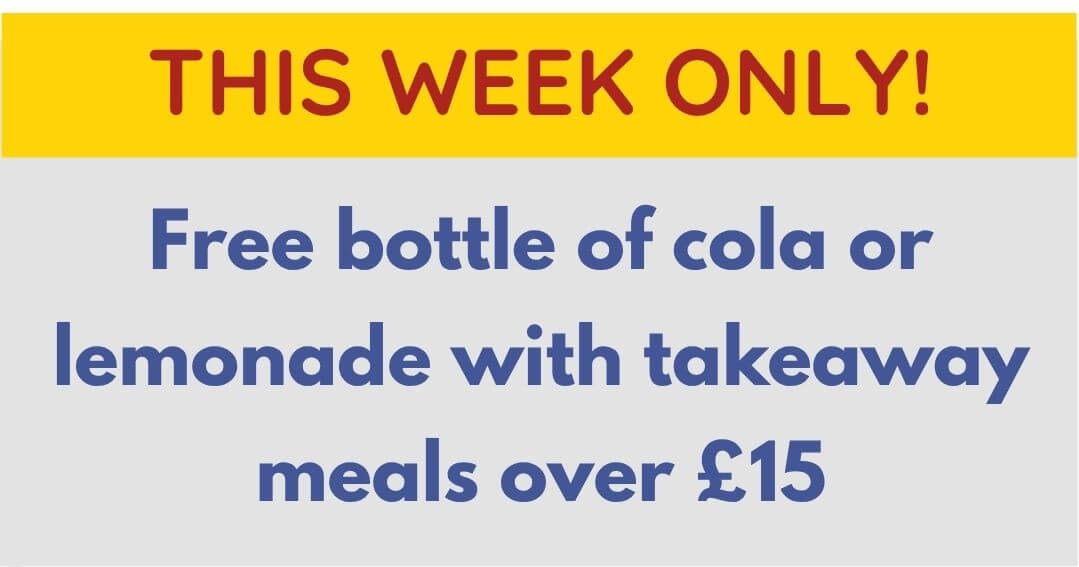
- Every customer will receive a free bottle of cola or lemonade.
- If you spend enough money on a takeaway, you get something free.
- All dine-in customers receive free drinks this week.
If you buy two meals this week, you’ll receive a free dessert.
What does the notice say?
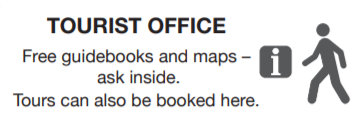
- This place only provides tour information, not booking services.
- Visitors must join a tour before receiving any travel materials.
- Tours leave from the tourist office.
- You can get travel materials without paying.
All art projects require cleanup afterward. All painting activities are art projects. Therefore, _____.
all art projects are painting activities
all painting activities require cleanup afterward
all cleanup activities are art projects
all cleanup is after painting
Choose the shape that completes the bottom pair so it shares the same relationship as the top pair.
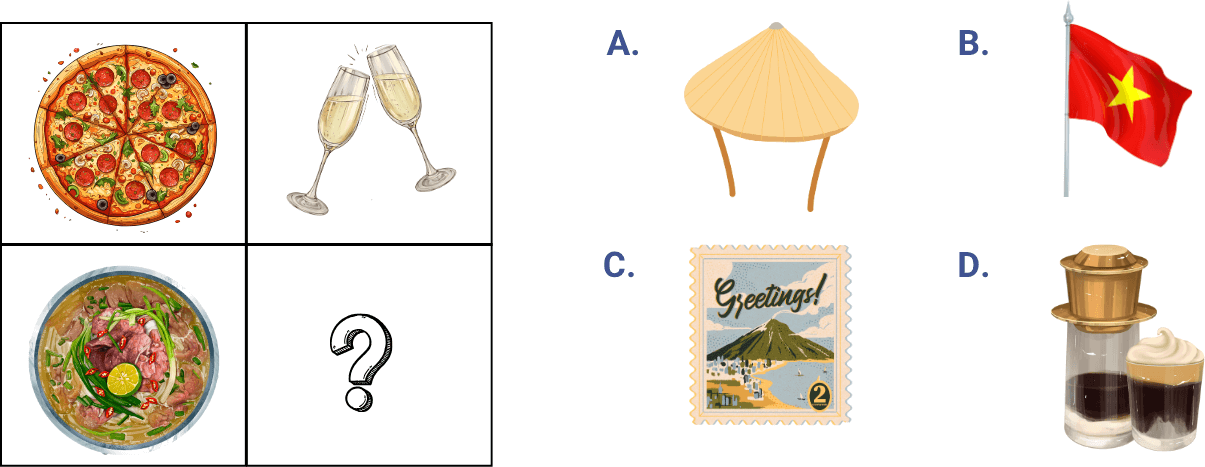
Shape A
Shape B
Shape C
Shape D
The girl wrote the card, put the card in an envelope, and stuck a stamp in the top right corner. Which photo is the missing step?
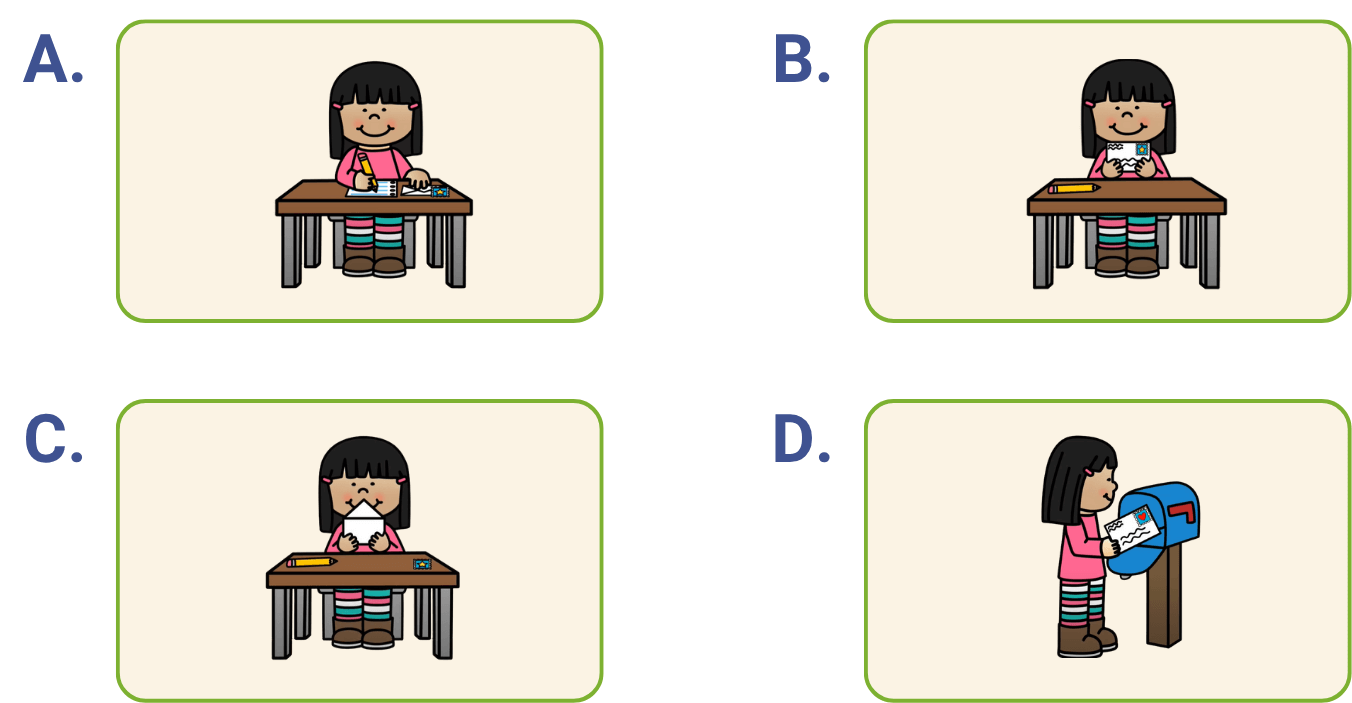
Photo A
Photo B
Photo C
Photo D
Read the text and choose the best answer to fill in the blanks.
Why Ocean Water is Salty
Have you ever wondered why ocean water tastes salty while river water tastes fresh? The answer lies in a natural cycle that has been taking for billions of years. When rain falls, it absorbs small amounts of gases from the air, making it slightly acidic. As this rain hits the ground, it erodes rocks and carries minerals into rivers, which eventually into the ocean. Over millions of years, these minerals, especially sodium chloride, have accumulated in vast quantities. Furthermore, heat from the Sun causes pure water to into the atmosphere, leaving the salt behind. Consequently, the oceans remain salty, making them a unique biological for marine life to thrive.
Read the passage below. Are the following sentences 'Right' or 'Wrong'? If there is not enough information to answer 'Right' or 'Wrong', choose 'Doesn't say'.
Imagine a small, impressive flying robot that travels rapidly across the open sky to deliver life-saving packages to patients in need. In the steep mountainous regions of northern Vietnam, reaching modern hospitals is often incredibly difficult for local residents. Because heavy seasonal rain frequently blocks narrow dirt roads, traditional ambulances cannot always reach remote villages during medical emergencies. To address this transportation challenge, engineers have developed autonomous medical drones capable of carrying essential medicines and vaccines. These machines are programmed to navigate over high mountains using advanced GPS technology. When the drone reaches its destination, it can precision-drop medical supplies using a small parachute. This method ensures that fragile items remain intact before being collected by healthcare workers on the ground. This aerial route takes only a fraction of the time required by ground vehicles, turning a dangerous multi-hour journey into a short, efficient flight. International health organizations are increasingly supporting these drone networks to reach isolated communities globally. By integrating this aerial technology into existing healthcare systems, medical professionals can significantly improve emergency response times and save lives in the world's most remote areas.
Heavy rain often prevents regular ambulances from traveling to the distant mountain villages.
- Right
- Wrong
- Doesn't say
The medical drones land safely on the ground so that healthcare workers can take the medicines out.
- Right
- Wrong
- Doesn't say
These modern flying machines can carry medical packages weighing up to five kilograms.
- Right
- Wrong
- Doesn't say
A drone flight to deliver vaccines to remote villages usually takes under thirty minutes.
- Right
- Wrong
- Doesn't say