Những tính từ được dùng như danh từ trong tiếng Anh
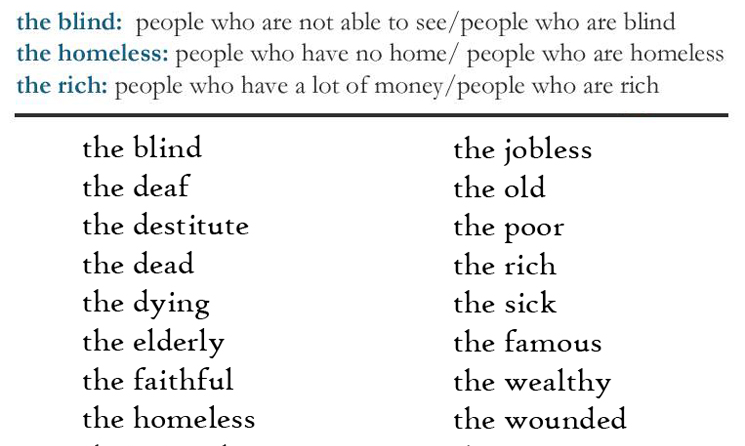
Một số tính từ khi kết hợp với mạo từ xác định "the" sẽ có chức năng như một danh từ, thường chỉ một tập hợp/một lớp người: the rich - người giàu, the poor - người nghèo, the homeless - người vô gia cư...
Ví dụ:
- The English are proud of their sense of humor.
- The rich should help the poor.
- The unemployed are losing hope.
- The government should do something for the jobless.
[%Included.Dangky.Nguphap%]
Những tính từ có chức năng như danh từ kể trên là số nhiều, do đó, động từ chia số nhiều.
Ví dụ:
- The rich are better off after the tax reforms.
- The injured were taken to a nearby hospital.
- The old and sick are advised to stay at home when pollution levels increase.
Ảnh: Vocabulary Page
Ta dùng of để nói về sở hữu cách của những danh từ trên, không dùng 's.
Ví dụ:
- The needs of the disabled. NOT
The disabled’s needs. - for the benefit of the poor NOT
the poor’s benefit
Trong một số trường hợp, tính từ có chức năng như danh từ này có thể mang nghĩa số ít: the accused - người bị buộc tội, the injured - người bị thương, the diseased - người bị bệnh...
Ví dụ:
- The deceased is survived by his wife.
Một số tính từ chỉ người, chúng cũng có thể được dùng như danh từ.
Ví dụ:
- We should respect our elders.
- We should be kind to our inferiors.
- The seniors should not torment their juniors.
- The rights of minors should be protected.
Tính từ cũng có góp mặt trong một số cụm từ nhất định.
Ví dụ:
- In short, you must behave well. (Tóm lại)
- The long and short of this is that he has lost his credibility. (tựu chung, điểm mấu chốt)
- I shall stand by you through thick and thin. (khó khăn, trở ngại)
- At best, I can arrange lodging for two more nights. (Khả quan nhất, trong điều kiện tốt nhất)
Xem thêm:
- Danh từ trong tiếng Anh: các vấn đề cơ bản và nâng cao
- Những điều bạn cần biết về tính từ trong tiếng Anh
- Tự ôn ngữ pháp tiếng Anh theo lộ trình nào là hợp lý?
[%Included.Nguphap%]
[%Included.tak12%]